









What Are the Different Types of Pigmentation?

Medically Reviewed By:
Dr. Mousumi Dash, BAMS
Written by Our Editorial Team
Dr. Mousumi Dash, BAMS
Written by Our Editorial Team
Medically Reviewed By:About the Reviewer
You have probably said it yourself: "Mujhe pigmentation hai." But pigmentation is not one problem. The brown mark a pimple left behind, the patch on your cheeks that darkens every summer, the darker skin on your underarms, and the freckles on your nose are all "pigmentation", yet each forms differently and each needs a slightly different approach.
That is why a cream that worked wonders for your friend's pimple marks may do almost nothing for your melasma. Knowing your type of pigmentation is the first step to treating it properly.
In this guide, we break down the main types of pigmentation in simple words, show you how to tell them apart, and explain what actually helps each one, based on what dermatologists and medical research say.
First, what is pigmentation? Your skin gets its colour from melanin, a pigment made by cells called melanocytes. When these cells make too much melanin in one area, you get darker patches. When they make too little, you get lighter patches. (If you want the basics, read what melanin is and why it matters for your skin.)
The Two Main Types: Hyperpigmentation vs Hypopigmentation
Doctors sort all pigmentation into two big groups, as explained in this review of pigmentation disorders in American Family Physician:
-
Hyperpigmentation means too much melanin. The skin looks darker than its surroundings: brown, grey-brown or almost black. Pimple marks, melasma, sun spots, freckles and dark underarms all fall here.
-
Hypopigmentation means too little melanin. The skin looks lighter or white. Vitiligo and the pale, dry patches some kids get on their cheeks are examples.
When most of us in India say "pigmentation", we mean hyperpigmentation, and that is what most of this guide covers. Indian skin (Fitzpatrick types III to V) makes melanin readily, which protects us from sunburn but also makes us more prone to dark marks after acne, heat, friction and sun.
Still confusing "pigmentation" with "dark spots"? Our guide on pigmentation vs dark spots clears that up.

Dark Spot Removal Cream
Science-backed Ayurveda, with a purpose for every ingredient Your dark-spot routine should be easy to understand. PO...
Shop Now →8 Common Types of Hyperpigmentation
1. Post-inflammatory hyperpigmentation (pimple marks)
What it looks like: Flat brown, dark brown or greyish marks exactly where a pimple, cut, burn, insect bite, rash or harsh treatment used to be.
Why it happens: Any inflammation tells your pigment cells to go into overdrive. Once the pimple heals, the extra melanin stays behind. This is the most common type in Indian skin, and the AAFP review notes it can last for months or even years if left alone.
The relatable bit: If you can't feel it with your fingertip, it's a mark, not a scar. That is good news, because marks fade with the right care. A good pimple mark removal cream plus sunscreen speeds that up. More tips in how to remove dark spots caused by pimples.
2. Melasma
What it looks like: Brown or grey-brown patches, usually on both cheeks, forehead, nose bridge or upper lip, often in a mirror-image pattern.
Why it happens: Hormones (pregnancy, birth control pills), sun exposure, heat and genetics. Melasma affects women far more than men (about 9 to 1). It appears in three typical patterns: centre of the face (63%), cheeks (21%) and jawline (16%), according to the same review. It is common in Indian women, especially from the 30s onwards.
The relatable bit: Melasma is the "it keeps coming back" pigmentation. It flares with sun, heat from cooking and hormonal changes. Pregnancy melasma often fades on its own after delivery. Read our full guide on what melasma is and how to manage it.
3. Sun spots (solar lentigines)
What it looks like: Flat, well-defined light-to-dark brown spots, roughly 1 to 3 cm, on sun-exposed areas like cheeks, hands, forearms and shoulders.
Why it happens: Years of sun exposure, which is why they are also called age spots or liver spots. They usually show up after 30–40 and become more noticeable with age.
4. Freckles (ephelides)
What it looks like: Tiny (1–2 mm), evenly coloured light brown dots, often across the nose and cheeks.
Why it happens: Mostly genetic, triggered by sun. Freckles get darker in summer and lighter in winter. They are harmless and more common in fairer skin types, so if you notice new "freckles" appearing in adulthood, they may actually be sun spots.
5. Sun tan
What it looks like: An overall darkening of sun-exposed skin, with a clear line where your sleeves, watch strap or footwear ended.
Why it happens: Tanning is your skin's natural defence against UV. It is technically temporary pigmentation and usually fades over weeks once you protect your skin. See our skincare routine for tan removal.
6. Dark underarms, neck, elbows and knees (friction-related pigmentation)
What it looks like: Darker, sometimes slightly rough skin in folds and friction areas: underarms, inner thighs, neck, elbows and knees.
Why it happens: Constant rubbing, shaving, waxing, sweat and tight clothing irritate the skin, which reacts by making more pigment. A velvety, thick dark patch on the neck or underarms can also be acanthosis nigricans, which is linked to insulin resistance, weight and hormones, so it is worth mentioning to your doctor.
The relatable bit: If you avoid sleeveless clothes because of your underarms, you are not alone. Gentle exfoliation with an underarm roll on for dark underarms can help loosen dead, darkened skin over time. Read does shaving or waxing cause dark underarms? to understand the triggers.
7. Other facial pigmentation common in Indian skin
Indian dermatologists also see a few less-talked-about types that are often mistaken for melasma, as discussed in this review of facial melanoses in Indian skin:
-
Dark circles (periorbital hyperpigmentation): brown or grey darkness around the eyes, often genetic.
-
Lichen planus pigmentosus: grey-brown to bluish patches on the face and neck, often linked to mustard oil, hair dye or amla oil use.
-
Riehl's melanosis (pigmented contact dermatitis): brownish-grey facial darkening triggered by repeated allergy to cosmetics, fragrances or hair dye.
These sit deeper in the skin and need a dermatologist's diagnosis.
8. Drug- or chemical-induced pigmentation
Some medicines (certain antimalarials, antibiotics and anti-seizure drugs) can darken skin, as described in this review of acquired hyperpigmentations. A key one to know in India is exogenous ochronosis: blue-black darkening caused by long-term misuse of hydroquinone-based or steroid "fairness" creams bought without a prescription. It is one of the hardest types to reverse, which is why you should never use prescription creams on your own.
Types of Pigmentation by Depth: Why Some Fade Faster
Here is something most people don't know: pigmentation also differs by how deep the extra melanin sits. This is the single biggest reason why some marks fade in weeks and others refuse to budge.
|
Depth type |
Where the pigment sits |
What it looks like |
How it responds to creams |
|---|---|---|---|
|
Epidermal |
Top layer of skin |
Light to dark brown, clear edges |
Responds well to topical creams and sunscreen |
|
Dermal |
Deeper layer of skin |
Grey, blue-grey or ashy, blurry edges |
Slow; often needs a dermatologist's treatment |
|
Mixed |
Both layers |
Dark brown with a greyish tinge |
Partly responds; needs patience and consistency |
Dermatologists check this with a Wood's lamp (a UV light) in the clinic: epidermal pigment looks sharper under the light, while dermal pigment does not. The AAFP review notes that dermal melasma is resistant to topical treatment and should be seen by a dermatologist.
What this means for you: if your patch is brown and well-defined, a good routine at home has a real chance. If it looks grey or bluish, see a dermatologist before spending months on creams.
Types of Hypopigmentation (Lighter Patches)
Lighter patches are less common, but worth recognising so you know when not to use brightening products on them.
-
Vitiligo: sharply defined milky-white patches, often on hands, face, lips or around the eyes. It is an immune condition, affects about 0.5–2% of people and is not contagious. It needs a dermatologist.
-
Pityriasis alba: pale, slightly dry or scaly patches on the cheeks, common in children with dry or eczema-prone skin. It usually fades on its own with moisturising and sun protection.
-
Tinea versicolor ("safed daag" from fungus): light or pinkish, finely scaly patches on the chest, back and neck, caused by a yeast that thrives in heat and sweat. Antifungal treatment clears it.
-
Post-inflammatory hypopigmentation: lighter patches after a burn, eczema or an aggressive peel.
Never apply skin-lightening creams to white patches. They need a diagnosis, not brightening.
Which Type of Pigmentation Do You Have? A Quick Guide
Stand in natural daylight, look closely, and match what you see.
|
If you notice... |
Where |
It is likely |
Can home care help? |
|---|---|---|---|
|
Flat brown marks where pimples used to be |
Face, back, chest |
Post-inflammatory hyperpigmentation |
Yes, very well |
|
Symmetrical brown patches that darken in summer |
Both cheeks, forehead, upper lip |
Melasma |
Partly; needs strict sun protection |
|
Single, well-defined brown spots that appeared with age |
Cheeks, hands, forearms |
Sun spots |
Yes, slowly |
|
Tiny light brown dots since childhood |
Nose, cheeks |
Freckles |
Not needed; sunscreen keeps them lighter |
|
Overall darkening with a clear tan line |
Face, arms, feet |
Sun tan |
Yes |
|
Dark, sometimes rough skin in folds |
Underarms, neck, inner thighs, knees |
Friction pigmentation (or acanthosis nigricans) |
Yes, with gentle exfoliation; see a doctor if velvety and spreading |
|
Grey, bluish or ashy patches |
Face, neck |
Dermal pigmentation, lichen planus pigmentosus or ochronosis |
See a dermatologist |
|
Milky-white or pale patches |
Anywhere |
Hypopigmentation |
See a dermatologist |
Not sure whether you need a spot treatment or a patch treatment? Our guide on dark spot cream vs dark patch cream helps you choose.
How to Treat Each Type of Pigmentation
The good news: most everyday pigmentation in Indian skin, pimple marks, sun spots, tan and dark underarms, responds well to a consistent routine. Here is what works for each.
Rule number one for every type: sunscreen
UV light switches pigment production back on every single day. Without sunscreen, even the best cream is fighting a losing battle. Use SPF 30 or higher every morning, reapply when outdoors, and remember that indoor heat and light near windows count too. This is especially true for melasma.
For pimple marks, sun spots and uneven tone
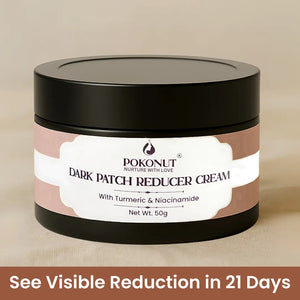
Look for a dark spot removal cream with proven brightening ingredients such as kojic acid and niacinamide. These slow down melanin production and stop pigment from spreading to the surface. The Pokonut Dark Spot Removal Cream combines both with hyaluronic acid, aloe vera and bearberry extract, so it targets marks while keeping skin hydrated.
If breakouts are still active, choose a pimple and dark spot removal cream that is light and non-greasy, so you can treat old marks without clogging pores. Give it 8–12 weeks; pigmentation fades at the speed your skin renews itself. Our article on how long acne marks take to fade sets realistic expectations.
Tips that make a real difference:
-
Don't pick or squeeze pimples. Every squeeze means more inflammation and a darker mark.
-
Avoid lemon juice, baking soda and toothpaste on spots. They irritate skin and can make pigmentation worse.
-
Apply a pea-sized amount to the affected area, not a thick layer. More product doesn't mean faster results.
For melasma
Melasma needs a gentler, longer game. Sun protection (sunscreen plus a hat or dupatta outdoors) is non-negotiable. Gentle brighteners like niacinamide and kojic acid can help epidermal melasma, but because melasma is hormonal and often recurs, work with a dermatologist if it is moderate to severe. Avoid harsh scrubs and DIY peels, as irritation makes melasma darker.
For tan
Tan responds well to sun protection, gentle exfoliation and brightening ingredients. A black spot removal cream with kojic acid can help even out tanned patches on the face. Wondering how far you can go? Read can tanned skin be fair again?
For dark underarms and friction areas
Here, the darkened skin is often a build-up of dead, thickened cells plus friction-triggered pigment. That is why gentle chemical exfoliation works better than scrubbing.
If you are looking for the best underarm roll on for dark underarms, choose one with AHA and BHA. The Pokonut 6% AHA BHA Underarm Roll On gently exfoliates dull, darkened skin and helps with odour too. It also works as an underarm tan removal roll on for darkness caused by sweat and shaving.
-
Apply on clean, dry underarms, ideally at night.
-
Skip it for 24–48 hours after shaving or waxing to avoid stinging.
-
Switch to a trimmer or gentle hair removal if shaving keeps irritating the area.
-
Wear breathable cotton and avoid very tight clothes.
Our step-by-step guide on how to use underarm roll on for dark underarms covers the routine in detail, and which treatment is best for dark underarms compares your options.
For deeper or unusual pigmentation
Dermal pigmentation, lichen planus pigmentosus, Riehl's melanosis, ochronosis and any white patches need a dermatologist. Home care here is limited to sun protection and stopping triggers like harsh cosmetics, hair dye or self-prescribed steroid creams.
When to See a Dermatologist
Most pigmentation is harmless. But book a visit if you notice any of these:
-
A spot that is changing in size, shape or colour, has uneven edges, multiple colours, bleeds, itches or doesn't heal. Doctors check such spots to rule out skin cancer.
-
Grey, blue or ashy patches, which usually sit deep in the skin.
-
White or very pale patches that are spreading.
-
Velvety, thick dark skin on the neck or underarms, especially with weight gain, irregular periods or a family history of diabetes.
-
Pigmentation that appeared after starting a new medicine.
-
No visible improvement after 3 months of consistent care with daily sunscreen.
-
Melasma that is moderate to severe, or that started during pregnancy and hasn't faded months after delivery.
The UK Primary Care Dermatology Society's guide on melasma and other causes of facial hyperpigmentation gives a helpful picture of how doctors tell these conditions apart.
The Bottom Line
Pigmentation is not one problem but many. Pimple marks, melasma, sun spots, freckles, tan and dark underarms all come from extra melanin, but they form for different reasons and sit at different depths. Once you know which type you have, choosing the right care becomes much simpler.
For most everyday concerns, the formula is the same: daily sunscreen, a gentle targeted product and patience for 8–12 weeks. Try the Pokonut Dark Spot Removal Cream for pimple marks, sun spots and tan, and the 6% AHA BHA Underarm Roll On for dark underarms. And if your pigmentation is grey, spreading or simply not responding, a dermatologist visit will save you months of guesswork.
Want to compare more options? See our list of the best pigmentation creams in India.
This article is for general information and does not replace advice from a dermatologist.
About Doctor :