









Dark Spot vs Dark Patch Cream: Which One Do You Need?
- 1 What Are Dark Spots?
- 2 What Are Dark Patches?
- 3 Dark Spots vs Dark Patches — Side by Side Comparison
- 4 Key Ingredients That Help Fade Spots and Patches
- 5 When to Choose Between Spot and Patch Cream?
- 5.1 When to Choose a Dark Spot Cream
- 5.2 When to Choose a Dark Patch Cream
- 6 How to Use Spot and Patch Creams for Best Results

Medically Reviewed By:
Dr. Mousumi Dash, BAMS
Written by Our Editorial Team
Dr. Mousumi Dash, BAMS
Written by Our Editorial Team
Medically Reviewed By:About the Reviewer
Many people use the words dark spots and dark patches as if they mean the same thing. But from a skin science point of view, they are slightly different. Understanding this difference is important because the type of pigmentation you have decides the kind of cream that will suit your skin better.
Dark spots are usually small, localised marks. Dark patches, on the other hand, cover a wider area and look like uneven skin tone rather than one clear mark. Both are caused by extra melanin, the natural pigment that gives skin its colour. But since their size and spread are different, the way we treat them also differs.
Let us break this down in a simple and logical way so you can understand what your skin really needs.
What Are Dark Spots?
Dark spots are small areas where the skin has produced more melanin than usual. Melanin is made by special skin cells called melanocytes. When these cells become overactive in one small area, a dark mark appears.
These spots often develop after acne, sun exposure, minor skin injuries, or inflammation. For example, after a pimple heals, it may leave behind a small brown mark. That mark is a dark spot.
They usually look like small round or oval patches that are darker than your normal skin tone. Because the pigmentation is limited to a small area, these marks often respond well to creams that are meant to work in a targeted way.
Also Read - Pokonut Dark Spot Removal Cream: Reviews and Visible Results
What Are Dark Patches?
Dark patches are larger areas of uneven pigmentation. Instead of one small mark, a bigger section of skin looks darker than the surrounding area. These patches may have soft or blurred borders rather than sharp edges.
They can be linked to conditions like melasma, long term sun exposure, hormonal changes, or repeated skin irritation. Dark patches are common on the cheeks, forehead, upper lip area, neck, and even on body areas like underarms, inner thighs, and knees.
Since the pigmentation spreads over a wider region, treatment needs to cover the whole affected area. This is why creams meant for dark patches are designed for broader application rather than spot treatment.
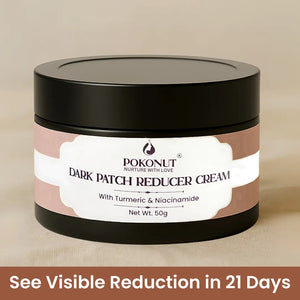
Also Read - Pokonut’s Best Dark Patch Removal Cream: What Sets It Apart?
Dark Spots vs Dark Patches — Side by Side Comparison
|
Feature |
Dark Spot |
Dark Patch |
|
Size |
Small and clearly defined marks, often the size of a pimple mark or sun freckle |
Larger areas that may cover part of the cheek, forehead, neck, or body folds |
|
Area Covered |
Usually appears as one or a few isolated marks on otherwise even-toned skin |
A broader section of skin looks darker compared to the surrounding area |
|
Common Causes |
Acne marks, minor skin injuries, insect bites, or small areas of sun damage |
Melasma, hormonal changes, long-term sun exposure, friction, or repeated irritation |
|
Pigmentation Pattern |
Looks like a concentrated spot of pigment with clearer edges |
Appears more spread out, with softer or uneven borders rather than one sharp mark |
|
Skin Behavior |
The rest of the surrounding skin tone is usually normal |
The entire affected region may look uneven or darker overall |
|
Treatment Approach |
Best treated with targeted application on the specific mark |
Needs cream to be applied over the whole affected area for overall tone correction |
|
Time to See Visible Change |
Often improves faster because the pigment is limited to a small area |
Takes longer since the pigmentation is spread across a wider region |
|
Example |
A brown mark left after a healed pimple |
Uneven darkening across cheeks or pigmentation on the neck |
Key Ingredients That Help Fade Spots and Patches
Certain ingredients are widely used in pigmentation care because of how they interact with melanin production in the skin. These ingredients do not bleach the skin. Instead, they support gradual brightening and help the skin return to its natural, even tone.
-
Niacinamide - Niacinamide is a form of Vitamin B3 that helps reduce the transfer of excess pigment to the surface skin cells. It also supports the skin barrier and helps calm redness or irritation that can trigger further pigmentation. This makes it useful for both small spots and larger patches.
-
Kojic Acid - Kojic acid works by slowing down the activity of an enzyme called tyrosinase, which is involved in melanin production. By reducing excess melanin formation, it helps fade dark areas gradually with regular use.
-
Vitamin C - Vitamin C is an antioxidant that helps brighten the skin and reduce the appearance of pigmentation. It also protects the skin from environmental stress, such as pollution and sunlight, which can worsen dark spots and patches.
-
Alpha Arbutin - Alpha arbutin is known for helping improve the appearance of uneven skin tone. It works by gently regulating melanin production and is often used in products meant for broader areas of pigmentation like dark patches.
-
Plant Based Antioxidants - Ingredients derived from plants can help soothe the skin and reduce inflammation. Since irritation can stimulate more pigment production, calming the skin plays an important role in preventing pigmentation from becoming darker.
Together, these ingredients support gradual tone correction when used consistently and as directed.

Dark Spot Removal Cream
Dark spots still visible even after the pimple has healed? Sun exposure, breakouts and hormonal changes can leave be...
Shop Now →When to Choose Between Spot and Patch Cream?
Choosing the right cream depends mainly on how your pigmentation looks and how much area it covers.
When to Choose a Dark Spot Cream
A dark spot cream is the correct option when your concern is limited to small, separate marks. If you notice one or a few dark spots left behind after acne, minor injuries, or small sun spots, a targeted cream works best. These creams are meant to be applied only on the mark, allowing active ingredients to focus on that specific area.
Because the surrounding skin tone is already even, using a spot cream avoids unnecessary application on unaffected skin. This approach suits people who do not have widespread pigmentation but want to fade individual dark marks gradually.
When to Choose a Dark Patch Cream
A dark patch cream is more suitable when the pigmentation is spread over a larger area. If the skin on your cheeks, forehead, neck, underarms, or inner thighs looks uneven or generally darker rather than having just one spot, then a patch cream is the better choice.
These creams are designed for application over the full affected region. They work more gradually because they address pigmentation across a broader surface. This type of cream is useful for concerns like melasma-like patches or general uneven tone caused by sun exposure or hormonal changes.
How to Use Spot and Patch Creams for Best Results
-
Apply the cream on clean, dry skin to help better absorption
-
Use only on the affected area, spots for spot creams and wider regions for patch creams
-
Apply regularly as directed, since pigmentation fades gradually over time
-
Use sunscreen during the day to prevent existing pigmentation from getting darker
-
Avoid combining too many strong active products at the same time to reduce irritation
-
Be patient and consistent, as visible improvement usually takes several weeks.
About Doctor :