









Skincare Routine for Tan Removal: A Step-by-Step Guide for Clear and Even Skin

Medically Reviewed By:
Dr. Mousumi Dash, BAMS
Written by Our Editorial Team
Dr. Mousumi Dash, BAMS
Written by Our Editorial Team
Medically Reviewed By:About the Reviewer
A good skincare routine for tan removal works by gently removing dead, tanned skin cells, brightening the skin with the right ingredients, and protecting it from the sun every day. Tanning happens when sunlight makes your skin produce extra melanin, which builds up in the outer layers and makes skin look darker and dull. A simple daily routine speeds up how fast this fades. The key is consistency and patience, as tan does not disappear overnight but fades steadily over a few weeks. Below is an easy, step-by-step guide for clear, even-toned skin.
Key Takeaways
-
Tan forms when UV rays trigger extra melanin in the skin's surface layers.
-
A routine of cleansing, exfoliating, brightening, and sun protection fades it faster.
-
Exfoliate only 1 to 2 times a week to avoid irritation.
-
Daily sunscreen is essential, as it prevents new tan and protects your progress.
-
Light tan fades in 1 to 3 weeks; deeper tan can take 1 to 2 months.
Why Does Skin Get Tanned?
Skin gets tanned when it is exposed to the sun and produces extra melanin to protect itself. Melanin is the pigment that gives skin its colour, and when UV rays hit the skin, it makes more of it as a natural defence against damage. This extra melanin gathers in the outer layers of the skin, which makes it look darker, dull, and uneven. Your skin naturally sheds these surface cells over time, so a tan does fade on its own, but slowly. Continued sun exposure keeps adding fresh melanin, which is why tan can look stubborn without a proper routine and sun protection.

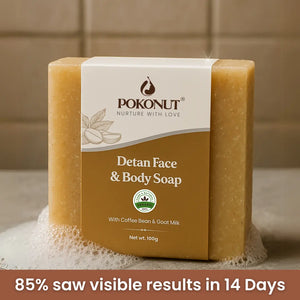
Pokonut Tan Removal Soap
Sun exposure doesn't have to mean long-term damage. Pokonut Tan Removal Soap is crafted to gently exfoliate, deeply n...
Shop Now →Step-by-Step Skincare Routine for Tan Removal

An effective tan removal routine follows seven simple steps: cleanse, exfoliate, tone, treat, moisturise, protect, and a weekly de-tan pack. Each step has a clear purpose, and together they remove tanned cells and reveal brighter skin.
Step 1: Cleanse
Start by washing your skin with a gentle, hydrating cleanser to remove dirt, sweat, oil, and sunscreen. Clean skin allows the next steps to work better. Avoid harsh soaps that strip the skin, as dryness makes tan look worse. Try using gentle tan removal soaps for better cleanse. Use lukewarm water rather than hot water.
Step 2: Exfoliate (1 to 2 times a week)
Exfoliation is the key step for tan removal, as it clears away the dead, tanned cells sitting on the surface. Use a mild exfoliant, such as a gentle scrub with fine granules or a low-strength acid like glycolic or lactic acid. Avoid harsh walnut or apricot scrubs, which can cause tiny tears in the skin. Limit exfoliation to once or twice a week to prevent irritation and dryness.
Step 3: Tone
Toning is an optional step that helps balance the skin and prepare it to absorb the next products. A gentle, alcohol-free brightening toner can help even out skin tone. Skip this step if your skin feels sensitive or dry. Look for calming ingredients like rose water or aloe vera.
Step 4: Treat with Actives
This is where brightening ingredients do the real work of fading tan and evening tone. Apply a serum or treatment with proven actives like vitamin C, niacinamide, kojic acid, or alpha arbutin. These slow down melanin and brighten the skin over time. Introduce strong actives slowly to let your skin adjust.
Step 5: Moisturise
Moisturising restores hydration and keeps the skin barrier healthy while it renews. Use a lightweight, non-greasy moisturiser suited to your skin type. Well-hydrated skin heals faster and looks brighter. Apply while the skin is still slightly damp to lock in moisture.
Step 6: Sunscreen (Morning, non-negotiable)
Sunscreen is the most important step in any tan removal routine, as it stops new tan from forming. Apply a sunscreen of SPF 50 every morning, even indoors or on cloudy days. Without it, UV rays keep producing melanin and undo your progress. Reapply every few hours when outdoors.
Step 7: Weekly De-Tan Pack
A weekly de-tan face pack gives your routine an extra boost. Use a gentle brightening mask with ingredients like aloe vera, turmeric, or yogurt once a week. This supports the fading process without over-treating the skin. Always follow a pack with moisturiser.
AM and PM Routine at a Glance
A tan removal routine is easiest to follow when split into a simple morning and night plan. Mornings focus on protection, while nights focus on repair and renewal. Use this quick recap.
|
Time |
Steps |
|
Morning (AM) |
Cleanse → Brightening serum → Moisturiser → Sunscreen (SPF 30+) |
|
Night (PM) |
Cleanse → Exfoliate or treat with actives → Moisturiser |
|
Weekly |
De-tan face pack once a week, gentle exfoliation 1 to 2 times a week |
Best Ingredients for Skin Care for Tanned Skin

The most effective ingredients for tanned skin either slow melanin production or gently exfoliate dead cells. Look for these when choosing tan removal products.
|
Ingredient |
How it helps |
|
Vitamin C |
Brightens skin and reduces melanin |
|
Evens tone and strengthens the skin barrier |
|
|
Kojic Acid |
Blocks the enzyme that produces melanin |
|
Alpha Arbutin |
Gently fades tan with low irritation risk |
|
Exfoliate dead, tanned cells from the surface |
|
|
Aloe Vera |
Soothes and hydrates sun-stressed skin |
|
Licorice |
Calms skin and helps brighten uneven tone |
Natural Remedies to Support Tan Removal
Natural remedies can gently support tan removal, but they work best alongside a proper routine, not as a replacement. A few safe, time-tested options include:
-
Aloe vera. Soothes sunburn, calms irritation, and lightly hydrates while supporting skin repair.
-
Turmeric. Rich in antioxidants, it can help brighten skin and reduce the look of pigmentation.
-
Yogurt. Contains lactic acid, which gently exfoliates and brightens dull skin.
-
Gram flour (besan). A traditional mild exfoliant that helps remove dead surface cells.
Avoid rubbing lemon juice directly on the skin, as it is acidic, can cause irritation, and increases sun sensitivity, which often makes tan worse.
Tips to Prevent Tanning
The best way to prevent tanning is to protect your skin from the sun every day, not just when it is sunny. A few simple habits go a long way:
-
Wear sunscreen daily, SPF 30 or higher, and reapply every few hours outdoors.
-
Cover up with a hat, sunglasses, and full sleeves when out in the sun.
-
Avoid peak sun hours, usually between 10 am and 4 pm, when UV rays are strongest.
-
Stay hydrated and moisturise to keep the skin barrier healthy.
-
Be consistent with your routine, as prevention is easier than removal.
When to See a Dermatologist
You should see a dermatologist if your tan or pigmentation does not fade after a couple of months of consistent care. Sometimes what looks like a tan is actually deeper pigmentation, such as melasma, which needs different treatment. A dermatologist can confirm the cause and suggest stronger options like professional peels if needed. It is also worth seeing one if your skin reacts badly to exfoliants or brightening actives, so you can find gentler alternatives suited to your skin.
The Bottom Line
A good skincare routine for tan removal comes down to a few consistent habits: cleanse gently, exfoliate once or twice a week, brighten with proven actives, moisturise, and never skip sunscreen. The same steps work for both the face and body, with only small adjustments. Results take time, usually a few weeks for light tan and longer for deeper tan, so patience and daily sun protection matter most. Follow the routine consistently, and your skin will look clearer, brighter, and more even over time.
About Doctor :