










Does Glycolic Acid Remove Tan? Benefits, Usage & Safety Tips

Medically Reviewed By:
Dr. Mousumi Dash, BAMS
Written by Our Editorial Team
Dr. Mousumi Dash, BAMS
Written by Our Editorial Team
Medically Reviewed By:About the Reviewer
Yes, glycolic acid helps remove tan, but it works by gently exfoliating the skin, not by bleaching it. When your skin tans, extra melanin builds up in the outer layer of dead skin cells. Glycolic acid loosens and sheds these tanned dead cells, so fresher, lighter skin can show through. It works gradually, usually over a few weeks, and only if you protect your skin with sunscreen every day. Used correctly, it fades tan while also smoothing and brightening the skin.
Key Takeaways
-
Glycolic acid fades tan by exfoliating dead, tanned skin cells, not by bleaching.
-
Tan sits in the skin's outer layer, which is why exfoliation helps.
-
Visible fading usually takes about 4 to 6 weeks of consistent use.
-
Daily sunscreen is essential, as glycolic acid makes skin more sun-sensitive.
-
Start with a low strength, a few times a week, to avoid irritation.
What Is Glycolic Acid?
Glycolic acid is a type of alpha hydroxy acid, or AHA, that is naturally derived from sugarcane. It has the smallest molecule size of all the AHAs, which means it can penetrate the skin easily and work effectively. Glycolic acid is a chemical exfoliant, which means instead of scrubbing the skin physically, it dissolves the bonds that hold dead skin cells together on the surface. As those old cells loosen and fall away, newer and fresher skin is revealed underneath. This is why glycolic acid is widely used to brighten dull skin, smooth texture, and fade tan and pigmentation.
Does Glycolic Acid Remove Tan?

Yes, glycolic acid removes tan by speeding up the natural shedding of tanned, dead skin cells. To understand how, it helps to know how a tan forms. When your skin is exposed to the sun, it produces more melanin, the pigment that gives skin its colour, as a way to protect itself. This extra melanin collects in the outer layers of dead skin cells, and the result is the darker look we call a tan. Your skin naturally sheds these cells over time, which is why a tan fades on its own, but slowly. Glycolic acid speeds up this process by dissolving the bonds between the dead cells so they shed faster, bringing lighter, even-toned skin to the surface. It is important to know that glycolic acid fades tan gradually and does not bleach the skin, so the goal is your natural skin tone, not artificial fairness.
How Long Does Glycolic Acid Take to Remove Tan?
Glycolic acid usually takes about 4 to 6 weeks of regular use to visibly fade a tan. This timeline depends on your skin's natural renewal cycle, which is roughly four weeks, and on how deep the tan is. A light, recent tan fades faster, while a deeper or older tan takes longer. Consistency is what matters most, as using glycolic acid a few times a week over several weeks works far better than occasional use. One thing that slows progress is continued sun exposure without protection, because fresh melanin keeps building up. This is why daily sunscreen is not optional when using glycolic acid for tan removal.
Benefits of Glycolic Acid for Skin

Beyond fading tan, glycolic acid offers several benefits that make it a valuable part of a skincare routine. Because it works by exfoliating and renewing the skin, its effects reach further than tan alone.
Fades Tan and Dullness
Glycolic acid removes the build-up of dead, tanned cells that sit on the skin's surface and make it look dark and dull. As these cells shed, fresher and brighter skin is revealed underneath. With regular use, the complexion looks more radiant and even.
Evens Out Skin Tone
Uneven skin tone often comes from patches of dead cells and excess pigment. By exfoliating the surface consistently, glycolic acid helps smooth out blotchiness and blend uneven areas. Over time, this leads to a more uniform, natural-looking tone.
Reduces Dark Spots and Pigmentation
Glycolic acid helps fade sun spots, acne marks, and other pigmentation by speeding up the removal of pigmented cells. It encourages newer, more even-toned skin to come to the surface. This makes it useful for people dealing with post-acne marks or sun damage.
Smooths Rough Texture
Rough, flaky, or bumpy skin is usually caused by a layer of built-up dead cells. Glycolic acid clears this layer, leaving the skin feeling softer and looking smoother. This is one of the reasons it is popular for a fresh, glassy finish.
Unclogs Pores and Helps Acne
By dissolving the dead cells and debris that block pores, glycolic acid helps reduce blackheads and breakouts. Clearer pores also mean the skin looks more refined. This makes it a helpful ingredient for oily and acne-prone skin.
Supports Collagen and Anti-Ageing
With consistent use, glycolic acid can gently stimulate collagen, the protein that keeps skin firm and elastic. This helps soften the look of fine lines over time. The result is skin that appears smoother and more youthful.
How to Use Glycolic Acid for Tan Removal
The safest way to use glycolic acid is to start with a low strength, apply it a few times a week at night, and always follow with sunscreen. Starting slow lets your skin build tolerance and avoids irritation. Use this simple guide to choose a strength.
|
Experience level |
Suggested strength |
How often |
|
Beginner |
Around 6% |
2 times a week |
|
Intermediate |
6% to 10% |
2 to 3 times a week |
|
Experienced |
10% to 12% |
3 times a week or as tolerated |
A simple night routine looks like this:
-
Cleanse with a gentle face wash and pat the skin dry.
-
Apply glycolic acid, avoiding the eye area.
-
Wait a minute, then apply a hydrating moisturiser.
-
The next morning, always apply a broad-spectrum sunscreen, SPF 50.
Introduce it slowly, and never use it on broken or irritated skin.

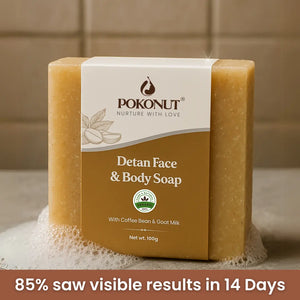
Pokonut Tan Removal Soap
Sun exposure doesn't have to mean long-term damage. Pokonut Tan Removal Soap is crafted to gently exfoliate, deeply n...
Shop Now →Glycolic Acid vs Physical Scrubs for Tan
Glycolic acid is usually gentler and more even than physical scrubs for removing tan. Physical scrubs use rough particles and friction, which can cause tiny tears and irritation, while glycolic acid dissolves the bonds between dead cells chemically for more controlled exfoliation. The table below compares them.
|
Feature |
Glycolic acid (chemical) |
Physical scrubs |
|
How it works |
Dissolves bonds between dead skin cells |
Removes dead cells with friction and grains |
|
Evenness |
Uniform and controlled |
Uneven, depends on pressure |
|
Irritation risk |
Lower, when used correctly |
Higher, can cause micro-tears |
|
Effect on pigmentation |
Helps fade it |
Over-scrubbing can worsen it |
|
Best suited for |
Facial skin, gradual tan fading |
Occasional, gentle body use |
|
Sun sensitivity |
Increases it, so SPF is a must |
Minimal on its own |
That said, glycolic acid is mainly suited to facial skin. For body tan on areas like the arms, neck, and back, gentler de-tan options such as a mild tan removal soap are often more practical for the thicker skin there.
Safety Tips and Side Effects
Glycolic acid is generally safe when used correctly, but it can cause irritation if overused or applied to sensitive skin. A few simple precautions keep it safe and effective:
-
Patch test first. Apply a small amount to your inner forearm and wait 24 hours before using it on your face.
-
Start slow. Begin with a low strength a few times a week, and build up only as your skin tolerates it.
-
Expect mild tingling. A slight tingle is normal, but stop if you feel stinging, burning, or see redness.
-
Never skip sunscreen. Glycolic acid makes skin more sensitive to the sun, so daily SPF is essential.
-
Do not over-exfoliate. Avoid layering it with other strong actives like retinol at the same time.
-
Moisturise well. Hydration keeps the skin barrier healthy while you exfoliate.
Who Should Avoid Glycolic Acid?
People with very sensitive, dry, or eczema-prone skin, or a damaged skin barrier, should be cautious with glycolic acid or avoid it. For these skin types, glycolic acid can cause stinging, redness, and irritation, so gentler exfoliants like lactic acid or PHAs are often a better choice. If you are pregnant or breastfeeding, check with your doctor before using it, even though it is generally considered low-risk in small amounts. And if your main concern is body tan rather than facial tan, a milder de-tan routine suited to thicker body skin is usually more comfortable than strong facial acids.
When to See a Dermatologist
You should see a dermatologist if your tan or pigmentation does not fade after consistent care, or if glycolic acid causes ongoing irritation. A professional can confirm whether you are dealing with a simple tan or deeper pigmentation, such as melasma, which needs different treatment. Dermatologists can also offer stronger, professional-grade glycolic acid peels that work faster than at-home products, done safely under supervision. If you have sensitive skin and are unsure which exfoliant suits you, a quick consultation can save you from irritation and wasted effort.
Conclusion
Glycolic acid does remove tan, but gently and gradually, by exfoliating the dead, tanned cells on the skin's surface rather than bleaching it. Most people see fading over four to six weeks with regular use, and results depend on the tan's depth and consistent daily sunscreen. The key is to start with a low strength, go slow, moisturise, and never skip SPF. Used wisely, glycolic acid not only fades tan but also brightens and smooths the skin overall.
About Doctor :