









Can Tanned Skin Be Fair Again?

Medically Reviewed By:
Dr. Mousumi Dash, BAMS
Written by Our Editorial Team
Dr. Mousumi Dash, BAMS
Written by Our Editorial Team
Medically Reviewed By:About the Reviewer
Yes, tanned skin can return to its original, natural tone over time, because a tan is temporary. It is important to be clear about what this means: your skin fades back to the shade it was before, not lighter or "whiter" than your natural colour. A tan happens when sunlight triggers your skin to make extra melanin, the pigment that gives skin its colour, as a way to protect itself. As your skin naturally renews itself, that extra pigment sheds and the tan fades. The process is gradual, not overnight, and the goal is healthy, even-toned skin rather than artificial fairness.
Key Takeaways
-
A tan is temporary and fades back to your natural skin tone, not lighter than it.
-
Skin renews itself over about four weeks, which is why tans fade gradually.
-
A light tan fades in 2 to 4 weeks; a deeper tan can take 1 to 3 months.
-
Sunscreen is the most important step, as it stops new tan from forming.
-
There is no safe way to make skin "whiter" than its natural colour.
Why Does Skin Get Tanned?
Skin gets tanned because sunlight triggers it to produce more melanin as a natural defence. When UV rays from the sun reach your skin, they stimulate cells called melanocytes to make extra melanin, the pigment that gives skin its colour. This melanin absorbs and scatters UV rays to protect the deeper layers of skin from damage, and the visible result is a darker, tanned appearance. The extra pigment collects in the outer layers of skin, which is why a tan sits on the surface and gradually fades as those cells are shed. So while a tan is a sign of sun exposure, it is also your body doing its job to protect you.

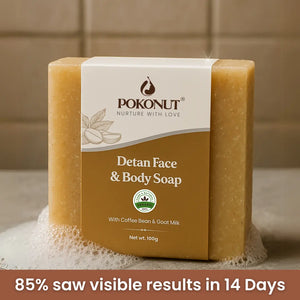
Pokonut Tan Removal Soap
Sun exposure doesn't have to mean long-term damage. Pokonut Tan Removal Soap is crafted to gently exfoliate, deeply n...
Shop Now →Does a Tan Go Away on Its Own?
Yes, a tan goes away on its own, because your skin constantly renews itself. The outer layer of skin naturally sheds old cells and replaces them with new ones over roughly four weeks, and as the tanned cells fall away, the tan fades and your natural tone returns. Research published in Cosmetics puts this turnover at about 20 days in young adults, lengthening by more than 10 days with age — which is one reason tans clear more slowly as you get older. A mild tan often clears on its own within a few weeks, while a deeper tan takes longer, and a gentle tan removal soap can help exfoliate tanned areas on the body. The catch is that ongoing sun exposure keeps adding new melanin, which resets the process and makes the tan look stubborn. This is why daily sun protection is the key to letting a tan fade fully.
How Long Does It Take for a Tan to Fade?
A light tan usually fades within 2 to 4 weeks, while a deeper or older tan can take 1 to 3 months. The exact time depends on how dark the tan is, your natural skin tone, how much sun you continue to get, and how consistent you are with sunscreen and skincare. Because the fading follows your skin’s natural renewal cycle, it cannot be rushed safely, and there is no genuine way to reverse a tan overnight. With regular care and daily sun protection, most people see steady, visible improvement over a few weeks.
What the Research Says About Fading a Tan
Most tan-removal advice is anecdotal, but one controlled trial looked specifically at people who already had a tan. Published in the British Journal of Dermatology, it followed 120 women with a moderate-to-deep facial tan for eight weeks. The study was randomised, double-blind and split-face, so each woman used a different product on each side of her own face: a plain moisturiser, an SPF 15 sunscreen, or the same sunscreen with 2% niacinamide added.
By week four, measured skin lightness had improved most with sunscreen plus niacinamide, then sunscreen alone, then the plain moisturiser. On visual assessment, only the niacinamide side looked noticeably lighter at that point — sunscreen alone was already working, but the change was not yet visible to the eye.
The practical takeaway is that a tan genuinely fades within about a month of consistent care, that sunscreen does the groundwork even before you can see it, and that adding a brightening active is what makes the difference show up sooner. Notably, no participant became lighter than her own natural tone; the skin simply returned towards its baseline colour.
How to Fade a Tan and Restore Your Natural Tone
The most effective way to fade a tan is to protect your skin from the sun, gently exfoliate, and use brightening ingredients consistently, as part of a simple skincare routine for tan removal. Together these help shed tanned cells and slow new melanin. A simple approach includes:
-
Wear sunscreen daily. This is the single most important step. A broad-spectrum SPF 30 or higher stops new tan from forming so the old tan can fade. In a 4.5-year randomised trial reported in the Annals of Internal Medicine, daily sunscreen users showed 24% less skin ageing than those who applied it only occasionally.
-
Exfoliate gently. Removing dead, tanned cells with a mild scrub or a low-strength acid (glycolic, lactic, or salicylic) once or twice a week reveals fresher skin. Avoid harsh scrubbing.
-
Use brightening actives. Ingredients like a vitamin C face serum, niacinamide, kojic acid, and alpha arbutin help even out tone and reduce excess melanin over time.
-
Keep skin hydrated. Well-moisturised skin looks healthier and renews more evenly, which supports fading.
-
Stay consistent. Fading is gradual, so daily care over weeks matters far more than any quick fix.
Best Ingredients to Fade Tan
The best ingredients for fading a tan either slow melanin production or gently exfoliate tanned skin. Look for these when choosing products.
|
Ingredient |
How it helps |
|---|---|
|
Antioxidant that evens tone and reduces excess melanin |
|
|
Niacinamide |
Fades uneven patches and strengthens the skin barrier |
|
Slows melanin production by blocking the enzyme tyrosinase |
|
|
Gently fades tan with a low risk of irritation |
|
|
Glycolic / Lactic Acid |
Exfoliate dead, tanned cells from the surface |
|
Licorice |
Calms skin and helps even out tone |
These ingredients work to restore your natural, even complexion. They are not skin-bleaching agents, and the aim is healthy, even-toned skin rather than an unnaturally lighter shade. That distinction matters: the World Health Organization has warned that some skin-lightening creams contain mercury, which blocks melanin formation but can cause kidney damage, rashes and scarring with prolonged use.
Natural Remedies: What Helps and What to Avoid
Some natural remedies can gently support tan fading, but they work slowly and a few can harm your skin. The safer, useful options include:
-
Aloe vera. Soothes and hydrates sun-stressed skin and supports healing.
-
Yogurt. Contains lactic acid, which gently exfoliates and brightens dull skin.
-
Turmeric. Has antioxidants that can help improve the look of uneven tone.
-
Gram flour (besan). A mild traditional exfoliant that lifts dead surface cells.
One thing to avoid is rubbing lemon juice on your skin. Although it is often recommended, lemon is very acidic, can irritate and damage the skin barrier, and makes your skin more sensitive to the sun. Citrus juice on skin that then meets sunlight can trigger phytophotodermatitis, a phototoxic reaction that dermatology case reports describe leaving dark patches for weeks or longer — the opposite of what you were trying to achieve. Overall, natural remedies are supportive at best, and proven ingredients plus sunscreen work far better.
Professional Treatments for Stubborn Tan
For a deep or stubborn tan that does not fade with home care, dermatologists offer treatments that work faster. These are professional-only and usually need a few sessions:
-
Chemical peels. Use acids like glycolic acid to exfoliate the skin more deeply and speed up cell renewal. In a study of Indian women with melasma, monthly professional glycolic acid peels improved pigmentation in 91% of patients over three months.
-
Microdermabrasion. Gently resurfaces the top layer of skin to improve tone and texture.
-
Laser and IPL (photorejuvenation). Target excess pigment to lighten stubborn tan and even out tone.
A dermatologist can advise which option suits your skin type, as some treatments are not ideal for every skin tone.
How to Prevent Tanning
The best way to prevent tanning is to protect your skin from UV rays every day, not just in strong sun. A few simple habits help a lot:
-
Wear sunscreen daily, SPF 30 or higher, and reapply every few hours outdoors.
-
Cover up with a hat, sunglasses, and full sleeves in the sun.
-
Avoid peak sun hours, usually 10 am to 4 pm, when UV is strongest.
-
Eat antioxidant-rich foods, like fruits and vegetables, to support skin health.
-
Stay consistent, because preventing tan is much easier than fading it later.
This is where most people slip. In a survey of 324 patients at an Indian dermatology clinic, only 14% used sunscreen regularly, despite it being the cheapest and best-supported step available.
When to See a Dermatologist
You should see a dermatologist if your tan does not fade after a couple of months of consistent care, or if you notice dark patches that look different from an even tan. Sometimes what appears to be a stubborn tan is actually pigmentation, such as melasma, which needs different treatment. A dermatologist can confirm the cause and recommend safe, effective options, including professional treatments for deeper pigmentation. Expert guidance is also the safest route if you have sensitive skin or are unsure which products suit you.
The Bottom Line
Tanned skin can return to its natural tone, but it happens gradually and cannot be rushed safely. With daily sun protection, gentle exfoliation, brightening ingredients, and a little patience, your skin fades back to its original, even complexion over a few weeks to a few months. The healthiest goal is even-toned, well-cared-for skin, not an artificially lighter shade. Focus on protecting your skin from the sun and staying consistent, and your natural tone will return on its own.
About Doctor :