






Can Stretch Marks Be Removed Permanently?

Medically Reviewed By:
Dr. Mousumi Dash, BAMS
Written by Our Editorial Team
Dr. Mousumi Dash, BAMS
Written by Our Editorial Team
Medically Reviewed By:About the Reviewer
Every clinic page you've opened promises permanent removal, and you'd like to know whether that's real before you spend anything. So here's the straight answer. No, stretch marks cannot be removed permanently or completely. They are scars in the deeper layer of your skin, and like any scar, the altered tissue stays. Two national dermatology colleges say this in plain language on their public pages, and we'll quote both below. Now the part that isn't bad news: stretch marks fade a great deal on their own, going from red or purple to pale and genuinely hard to notice, and treatment can take that further. This guide covers what each option realistically achieves, what it costs in India, and the things that are proven not to work at all.
Key Takeaways
-
No. Stretch marks are permanent scars — the structure of the skin has changed.
-
The American Academy of Dermatology and the Australasian College of Dermatologists both state this directly.
-
They do fade substantially on their own, from red or purple to pale white.
-
Early red marks respond far better to treatment than old white ones.
-
No laser, microneedling session or cream removes them. All of them reduce visibility at best.
-
Cocoa butter, olive oil, almond oil and vitamin E showed no benefit in studies.
-
The realistic goal is marks you stop noticing — which is achievable, and for most people enough.
Why Stretch Marks Are Classed as Permanent
Because they are scars, and scars don't un-form.
Here's what actually happened in your skin. Rapid stretching tore the collagen and elastin network in the dermis — the layer underneath the surface that gives skin its strength and its spring. Your body repaired that tear the way it repairs any tear: with scar tissue. Scar tissue does its job, but it's built differently from the skin it replaced, with fibres laid down in a different arrangement.
That structural difference is the thing that stays. A mark can become flatter, paler and much harder to see, but the tissue underneath remains altered. It's the same reason a scar from a childhood fall fades over the years into a faint line you have to look for — and never quite disappears.
This matters because it reframes the whole question. You're not trying to remove something. You're trying to make something less visible. Those are different goals with very different success rates.
What Two Dermatology Colleges Actually Say
Both say the same thing, and neither leaves any room for interpretation.
The American Academy of Dermatology states: "Like any scar, stretch marks are permanent, but treatment may make them less noticeable." On the clinical procedures specifically — the lasers, the peels, the needling — it is even more direct: "none of these can get rid of stretch marks."
The Australasian College of Dermatologists puts it in one sentence: "No treatment will remove stretch marks completely."
Two separate national dermatology bodies, independently, in writing, on pages anyone can read.
So here's the useful thing to take from that, without pointing fingers at anyone. If a page or a clinic is promising you permanent removal, it is promising something that two national dermatology colleges say is not currently available. That's worth knowing before a consultation rather than after you've paid for a course of six sessions.
How Much Can Stretch Marks Realistically Improve?
A great deal — just not to zero. And how much depends almost entirely on how old your marks are.
|
Situation |
Realistic outcome |
|
Early red or purple marks (striae rubra) |
Best response. Colour and texture can improve substantially, both with time and with treatment |
|
Old white marks (striae alba) |
Much harder. Treatment may improve texture and reduce contrast, but rarely erases the scar |
|
With time alone, no treatment at all |
Most fade from red or purple to pink, then to pale white and far less noticeable — but they don't vanish |
|
With dermatological treatment |
Appearance and texture can improve, but no procedure reliably produces complete removal |
It's worth sitting with that third row for a second, because it's the row people overlook. The distance between "red, raised and the first thing I see" and "pale, flat and I'd forgotten it was there" is a big distance. Most of that journey happens on its own. So this isn't a counsel of despair — it's a correction of the target.
If you're trying to work out which stage yours are at, the red and white stretch marks comparison makes it easy to tell, and that single fact predicts more about your result than any product choice.
Why Early Marks Respond and Old Ones Don't
Because early marks are still actively repairing themselves, and old ones have finished.
Red and purple marks have active blood flow running through them and ongoing collagen activity in the tissue. Anything you apply or any procedure you have is nudging a process that's already underway — it has something to work with. White marks are settled, mature scar tissue with a reduced blood supply and very little going on. There's simply much less for a treatment to influence.
The AAD states it plainly: "Treatment seems to have little effect on mature stretch marks."
Which leads to the most actionable thing on this page. Timing matters more than product choice. If your marks are still red, you are in the window where effort pays off. If they've already turned white, you can still improve texture and contrast, but the honest expectation is smaller — old stretch marks covers what realistically helps at that stage.
What the Evidence Says Each Treatment Can Achieve
Every option below has some evidence behind it. None of it is evidence of removal.
|
Treatment |
What the evidence shows |
|
Tretinoin (prescription retinoid) |
Improves early stretch marks by supporting collagen remodelling. Not suitable during pregnancy or breastfeeding without a clinician's guidance |
|
Microneedling |
Stimulates collagen production. One study of 25 adults reported at least 50% improvement after one to three treatments, with no permanent adverse effects |
|
Laser therapy |
Pulsed dye laser can reduce redness in early marks; fractional lasers may improve texture in older ones. Results vary and multiple sessions are standard |
|
Hyaluronic acid |
May make early marks less noticeable, though the effects are modest |
|
Radiofrequency, ultrasound, chemical peels, microdermabrasion |
May improve appearance, but none can fully eliminate stretch marks |
|
Cocoa butter, olive oil, almond oil, vitamin E |
Have not been shown to remove stretch marks. The AAD reports these showed no benefit in studies |
The pattern across that table is consistent and worth naming: the better-evidenced treatments are the ones aimed at early marks, the results are described as improvement rather than clearance, and the honest ceiling is the same everywhere.
References
-
American Academy of Dermatology. Stretch marks: why they appear and how to get rid of them. Read on AAD
-
Australasian College of Dermatologists. A–Z of Skin: Striae. Read on ACD
Supporting guidance: Mayo Clinic, Stretch marks — diagnosis and treatment, and Medscape, Striae distensae (stretch marks) treatment and management.
What this costs in India, and what you get for it
This is the part nobody puts next to the honest answer, so here it is.
Indian clinics typically quote around ₹5,000 to ₹20,000 per laser session, across three to six sessions. So a full course runs from roughly ₹15,000 at the low end to well over ₹1,00,000 at the top, depending on the city, the device and the area being treated.
Now set that against what the evidence says you get: improvement in colour and texture, varying between individuals, often needing maintenance, and not removal.
That's not an argument against having it done. For some people, meaningfully fading marks they notice every single day is worth that money, and that's a completely reasonable decision to make with clear eyes. For others it isn't, and that's equally reasonable. What isn't fair is being quoted the price before anyone has told you the ceiling.
If you do go for a consultation, the single most useful question to ask is not "how many sessions will I need?" It's "how much improvement should I realistically expect, for my marks, at this stage?" A good practitioner will give you an honest answer and may well talk you out of it.
What's Proven Not to Work
The home remedies recommended most often are the ones with the clearest negative evidence — which is an uncomfortable thing about this topic.
The AAD reports that almond oil, cocoa butter, olive oil and vitamin E showed no benefit in studies on stretch marks. These are, almost without exception, the four things you'll be told to try.
To be fair about what they do and don't do: they moisturise well, they feel pleasant, they improve skin comfort and hydration, and none of that is worthless. What they cannot do is reach a scar sitting in the dermis and reorganise it. Moisturising the surface doesn't change the structure underneath.
So this isn't a reason to throw out your coconut oil. It's a reason not to expect removal from it, and not to spend heavily on anything sold on that promise. We've looked at two of these in detail — whether coconut oil for stretch marks works and whether shea butter for stretch marks does — and the answers are consistent with everything here.

Pokonut Stretch Mark Cream
Stretch marks show up when skin stretches faster than it can rebuild during pregnancy, a growth spurt, a weight...
Shop Now →What Is Worth Doing
Treat them while they're still red, moisturise consistently, and go into any clinical option with the ceiling already in mind.
-
Act while the marks are red. This is the highest-leverage decision available to you, and it's free. Every treatment studied works better on early marks.
-
Use a rich emollient daily. The AAD notes creams are most useful on early marks. Reviewers assessing successful trials have also found the moisturising base itself appears to do much of the work, which is a point in favour of something thick you'll actually use.
-
Look for the ingredients that have evidence — hyaluronic acid, centella asiatica, rosehip oil — while knowing the effects are modest rather than dramatic.
-
Skip retinoids if you're pregnant or breastfeeding. Tretinoin has the best topical evidence of anything here and is specifically not used in those situations. Discuss it with a doctor otherwise.
-
Consider microneedling or laser if the marks genuinely bother you and you've accepted what they can and can't do. Ask about improvement, not removal.
-
Reduce the chance of new ones where you can. Gradual rather than rapid weight change helps. Genetics, which is the biggest factor, you can't do anything about.
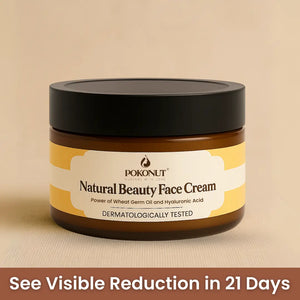
On the cream question specifically: the honest role of a topical is to support early marks and keep the skin well hydrated while they fade — not to remove anything. A stretch mark cream with a rich shea butter base carrying hyaluronic acid, rosehip oil and mulethi, free of retinoids, fits that brief. Used twice daily on marks that are still red, over two to three months, it's working with the fading process rather than claiming to replace it.
For choosing between options, best stretch mark cream in India compares what's available on ingredients, and best stretch mark cream after delivery covers the postpartum window specifically, which is when marks are usually at their most treatable.
When to See a Dermatologist
Worth booking an appointment if:
-
The marks genuinely affect how you feel day to day and you want an honest assessment of what's possible for your skin specifically.
-
You want to try prescription tretinoin, which has better evidence than anything available over the counter.
-
You're considering laser or microneedling and want someone to tell you whether you're a good candidate before you commit financially.
-
Marks appeared with no obvious trigger — no pregnancy, no growth spurt, no weight change — especially alongside weight gain around the middle, easy bruising or muscle weakness, which can point to a hormonal cause worth testing for.
The Bottom Line
Stretch marks cannot be removed permanently, because they are permanent scars in the dermis — the American Academy of Dermatology and the Australasian College of Dermatologists both state this in plain terms. What they do instead is fade, often dramatically, from red or purple to pale and barely noticeable. Treatment can speed that up and improve texture, with early marks responding far better than mature white ones, and the oils most commonly recommended showing no benefit at all in studies. So the honest goal was never removal. It's getting your marks to the point where you stop noticing them — and that is both achievable and, for most people, entirely enough.
About Doctor :