









5 Proven Ways to Treat Old Stretch Marks

Medically Reviewed By:
Dr. Mousumi Dash, BAMS
Written by Our Editorial Team
Dr. Mousumi Dash, BAMS
Written by Our Editorial Team
Medically Reviewed By:About the Reviewer
Old stretch marks, the faded white or silver lines, can be made much less noticeable, but they cannot be fully erased. They are mature scars, formed when the skin's collagen and elastin were stretched and torn, so the deeper structure has already settled. The honest truth is that no cream or procedure removes them completely, but the right treatments genuinely improve how they look. The best results come from professional options like microneedling and laser, supported by consistent care at home. This guide covers five proven ways to fade old stretch marks and what to realistically expect.
Key Takeaways
-
Old white stretch marks can be faded and softened, but not fully removed.
-
They are harder to treat than new marks because they are settled scars.
-
The most effective options are professional: microneedling, laser, and peels.
-
Exfoliation and hydration at home support results but cannot erase marks.
-
Popular home remedies like cocoa butter and vitamin E have weak evidence.
Why Are Old Stretch Marks Harder to Treat?
Old stretch marks are harder to treat because they are mature scars where the skin has stopped actively healing. When stretch marks first form, they are red, pink, or purple, known as striae rubra, and the skin is still inflamed and repairing itself, which makes this stage the easiest to treat. Over time, the marks fade to white stretch marks, called striae alba, as the redness settles, blood vessels shrink, and the skin loses collagen and pigment in that area. Because old marks have less blood flow and the damage sits deep in the skin, creams applied on the surface do far less for them. This is why deeper, collagen-stimulating treatments tend to work better on older marks, and why starting care early always gives better results.
Can Old Stretch Marks Be Removed Completely?
No, old stretch marks cannot be removed completely by any treatment currently available. No stretch mark removal method, including laser therapy and even surgery, fully erases them, because the marks are permanent scars in the deeper layers of skin. What these treatments can do is reduce their appearance, sometimes significantly, by rebuilding collagen and improving skin texture and colour. Setting this expectation honestly matters, because many products and clinics promise complete removal that is not realistic. The practical goal is to make old marks flatter, lighter, and much less noticeable, so they blend in better with the surrounding skin.

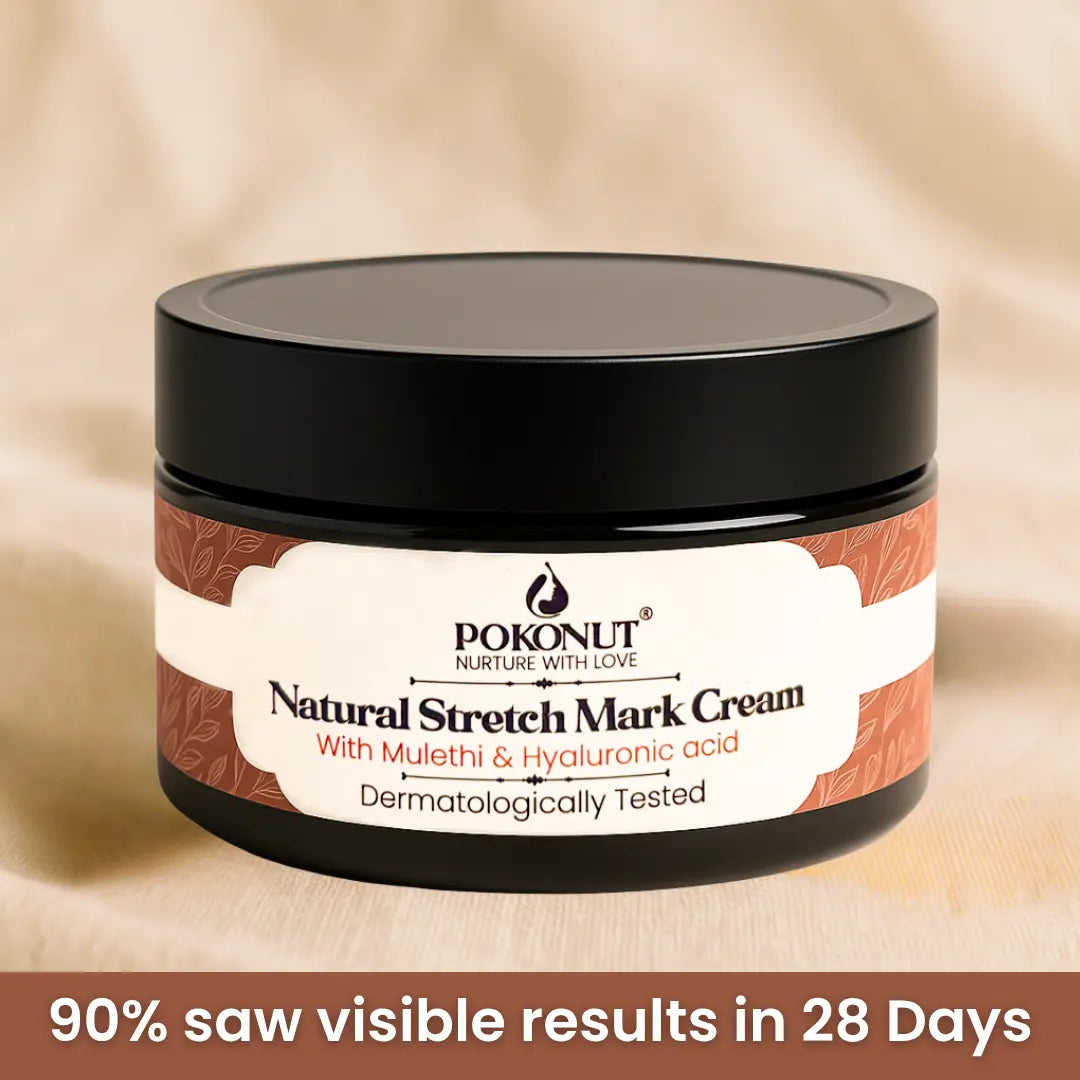
Pokonut Stretch Mark Cream
Stretch marks show up when skin stretches faster than it can rebuild during pregnancy, a growth spurt, a weight...
Shop Now →5 Proven Ways to Treat Old Stretch Marks
The most effective ways to fade old stretch marks combine gentle at-home care with professional treatments that rebuild collagen. Here are five proven options, from the simplest to the most advanced.
1. Exfoliation
Regular exfoliation is the simplest at-home way to improve old stretch marks. It removes the build-up of dead skin cells on the surface, which improves texture and helps other treatments and creams absorb more deeply and work better. Use a gentle scrub or a mild exfoliating acid on the area once or twice a week, and avoid harsh scrubbing, which can irritate the skin. On its own, exfoliation makes a modest difference, but it is a useful foundation alongside other methods.
2. Topical Treatments
Topical treatments can soften and lighten the look of old marks, though they work gradually and cannot erase them. Prescription retinoids, derived from vitamin A, help rebuild collagen and work best on newer marks, but they are not safe during pregnancy or breastfeeding, when pregnancy safe ingredients are the better choice. Hyaluronic acid and rich moisturisers keep skin supple and can improve the appearance of marks with daily use. A good old stretch marks removal cream that combines hydrating and skin-supporting ingredients helps soften the marks and keep skin healthy, especially when used consistently over months.
3. Microneedling
Microneedling is one of the most effective treatments for old stretch marks. It uses a device with tiny needles to create controlled micro-injuries in the dermis, the middle layer of skin where stretch marks form, which triggers the body to produce new collagen and elastin. This helps rebuild the skin and reduce the appearance of marks. Microneedling is considered safer than some lasers for deeper skin tones, but it usually needs several sessions over months and should be done by a professional.
4. Laser Therapy
Laser therapy is a popular and effective option for fading old stretch marks. It works by delivering targeted light energy into the skin to stimulate collagen production and improve skin texture and colour, helping marks blend in with the surrounding skin. Laser treatments usually require several sessions to see results and must be carried out by a trained professional. One important point is that some lasers are not suitable for deeper skin tones, so a dermatologist should choose the right type for your skin.
5. Chemical Peels and Microdermabrasion
Chemical peels and microdermabrasion improve old stretch marks by exfoliating the skin more deeply than home methods. Chemical peels use acids like glycolic acid to remove the top layers of skin, which encourages fresh, smoother skin to form, and studies suggest they can reduce the width of stretch marks and improve their colour. Microdermabrasion uses fine crystals to resurface the skin. Both need a series of sessions and are best done professionally. In rare cases of loose skin after major weight loss, surgery may be considered as a last resort.
What Actually Works vs What Doesn't
Being honest about what helps saves you time and money, as many popular remedies have little scientific support. The table below separates proven approaches from those with weak evidence.
|
Genuinely helps old marks |
Weak or no evidence |
|
Microneedling (collagen rebuilding) |
Cocoa butter alone |
|
Laser therapy |
Vitamin E oil alone |
|
Chemical peels and microdermabrasion |
Almond or olive oil alone |
|
Consistent exfoliation and hydration |
"Miracle" removal creams |
|
Retinoids (mainly on newer marks) |
Tanning (makes marks more visible) |
Research from dermatology bodies has found that massaging oils like almond, cocoa butter, or vitamin E into stretch marks does not reliably fade them. These are not harmful and can keep skin soft, but they should not be expected to remove marks on their own.
How to Support Skin at Home
At home, you can support professional treatments and keep skin healthy by moisturising, massaging, exfoliating, and protecting from the sun. While these steps cannot erase old marks, they improve skin quality and help marks look less obvious. A practical home routine includes:
-
Moisturise daily. Keeping skin well hydrated makes it look smoother and healthier. Applying the best cream for old stretch marks with hydrating ingredients like hyaluronic acid, rosehip, shea butter, and mulethi supports the skin, though it works alongside, not instead of, professional treatments.
-
Massage the area. Gentle circular massage boosts circulation, which supports skin health and helps products absorb.
-
Exfoliate gently. Once or twice a week to clear dead cells and improve texture.
-
Protect from the sun. Old marks do not tan, so sun exposure makes them stand out more. Use sunscreen on exposed skin.
-
Stay consistent. Improvements are gradual, so daily care over months matters most.
How Long Does It Take to See Results on Old Marks?
Results on old stretch marks take time, usually several weeks to a few months, and improvement is gradual rather than dramatic. Old marks respond more slowly and modestly than new ones, because the skin has already settled into scar tissue. Professional treatments like microneedling and laser typically need multiple sessions spread over months before you see a clear difference. At-home care shows even slower, subtler results. The key is patience and consistency, along with realistic expectations, since the goal is to fade and soften marks rather than remove them entirely.
When to See a Dermatologist
You should see a dermatologist if you want real, visible improvement in old stretch marks, as professional treatments work far better than creams alone. A dermatologist can assess your marks and skin type and recommend the most effective option, whether that is microneedling, laser therapy, or chemical peels. This is especially important for choosing a laser, since some are not suitable for deeper skin tones. A professional will also give you an honest idea of the results you can expect and how many sessions you may need, which helps you plan realistically.
The Bottom Line
Old stretch marks will not disappear completely, but they can be faded and softened with the right approach. The most effective methods are professional treatments like microneedling, laser, and chemical peels, which rebuild collagen and resurface the skin. At home, consistent exfoliation, hydration, and sun protection support these results and keep skin healthy. It is best to skip products that promise full removal, since no cream can erase mature marks. With patience, consistency, and realistic expectations, old stretch marks can become far less noticeable.
About Doctor :