









Does Shea Butter Help Reduce Stretch Marks and Scars?

Medically Reviewed By:
Dr. Mousumi Dash, BAMS
Written by Our Editorial Team
Dr. Mousumi Dash, BAMS
Written by Our Editorial Team
Medically Reviewed By:About the Reviewer
Shea butter can help stretch marks and scars look better, but it cannot remove them completely. Stretch marks and scars are changes in the deeper layers of skin, and no cream or butter can fully erase that kind of damage. What shea butter does well is deeply moisturise, soften, and soothe the skin, which makes marks appear less noticeable over time. It works because it is rich in fatty acids and vitamins A and E that support skin health. Used regularly, it is a safe, gentle way to improve the look and feel of marked skin.
Key Takeaways
-
Shea butter improves the appearance of stretch marks and scars but does not erase them.
-
It works mainly by hydrating and softening skin, which makes marks look less obvious.
-
Fatty acids, triterpenes, and vitamins A and E support skin comfort and healing.
-
Fresh marks respond better than old white or silver ones.
-
No cream, including shea butter, is proven to fully prevent stretch marks.
What Are Stretch Marks and Scars?
Stretch marks and scars are both forms of skin damage where the skin's structure has changed during healing. Stretch marks, known medically as striae, appear when the skin is stretched quickly, such as during pregnancy, growth spurts, or weight change, and the middle layer of skin tears. Scars form when the skin heals after a wound, acne, or surgery. In both cases, the fibres that keep skin firm and elastic, collagen and elastin, are disrupted. New marks often look red, pink, or purple, and over time they fade to white or silver. Because the transition of stretch marks from red to white happens in the deeper layer of skin, creams applied on top can improve how marks look and feel, but they cannot rebuild the deeper structure.
Does Shea Butter Help Reduce Stretch Marks and Scars?
Yes, shea butter can help reduce the appearance of stretch marks and scars, but it will not make them disappear. Its real strength is conditioning the skin: it hydrates deeply, softens rough or tight areas, and calms redness, all of which make marks blend in more with the surrounding skin. It also supports the skin's natural healing process rather than removing scar tissue. So while shea butter is a genuinely useful part of a skincare routine for marked skin, it is best understood as something that improves appearance and comfort, not a treatment that erases marks.
How Does Shea Butter Work on Skin?
Shea butter helps skin in three main ways: it hydrates deeply, calms inflammation, and supports healing. These come from its natural mix of fatty acids, plant compounds, and vitamins.
Deep Hydration From Fatty Acids
Shea butter is rich in fatty acids like oleic, stearic, and linoleic acid, which sink into the skin and lock in moisture. Well-hydrated skin is softer and more elastic, so it copes better with stretching and looks smoother. This is why shea butter is so widely used on dry, stretched, or scarred skin.
Calms Inflammation With Triterpenes
Shea butter contains natural compounds called triterpenes, which have anti-inflammatory properties. In new stretch marks and early scars, calming redness and irritation helps the area look and feel better. Soothing the surrounding skin also improves its overall texture.
Supports Healing With Vitamins A and E
Shea butter is packed with antioxidants, especially vitamin A and vitamin E. These help protect skin cells from damage and support the skin's natural repair and regeneration. Over time, this can gently improve the look of both stretch marks and scars.
Shea Butter for Stretch Marks vs Scars
Shea butter helps stretch marks and scars in slightly different ways, though the core benefit, hydration, is the same for both. The table below shows how it supports each.
|
Concern |
How shea butter helps |
What to expect |
|
Stretch marks |
Hydrates, improves elasticity, reduces redness and itching |
Softer, less noticeable marks over months |
|
Scars |
Softens scar tissue, reduces dryness, calms inflammation |
Smoother, more comfortable skin, gradual fading |
In both cases, shea butter works best on fresh, newer marks. Old white or silver stretch marks and mature scars are settled and respond far less to any topical product.
Does Shea Butter Prevent Stretch Marks Fully?
No cream or butter, including shea butter, is proven to fully prevent stretch marks from forming. Whether you get stretch marks depends largely on factors outside a product's control, such as genetics, hormones, and how quickly your skin stretches. What shea butter can do is keep skin well moisturised and supple during pregnancy or weight change, which reduces dryness and itching and may help make any marks that do appear less severe. Start using stretch mark cream early, before marks form, and applying it consistently gives the best chance of comfortable, healthy skin, even if it cannot guarantee prevention.
Unrefined vs Refined Shea Butter: Which Is Better?
Unrefined shea butter is generally better for stretch marks and scars because it keeps more of its natural nutrients. Refined shea butter is processed with heat and sometimes chemicals, which changes its texture and smell but can strip away some of its skin benefits. Here is how the two compare.
-
Unrefined (raw) shea butter. It is minimally processed, so it retains more fatty acids, vitamins A and E, and anti-inflammatory compounds. This makes it the more effective choice for marked or scarred skin.
-
Refined shea butter. It is processed for a smoother feel and milder smell, which some people prefer, but this processing can remove some of the nutrients that benefit skin.
-
Texture and scent trade-off. Unrefined shea has a stronger natural, nutty scent and a grainier feel, while refined shea is softer and almost odourless.
-
The better pick for marks. For stretch marks and scars, unrefined shea butter is usually the smarter choice, as the extra nutrients are exactly what support skin health and healing.

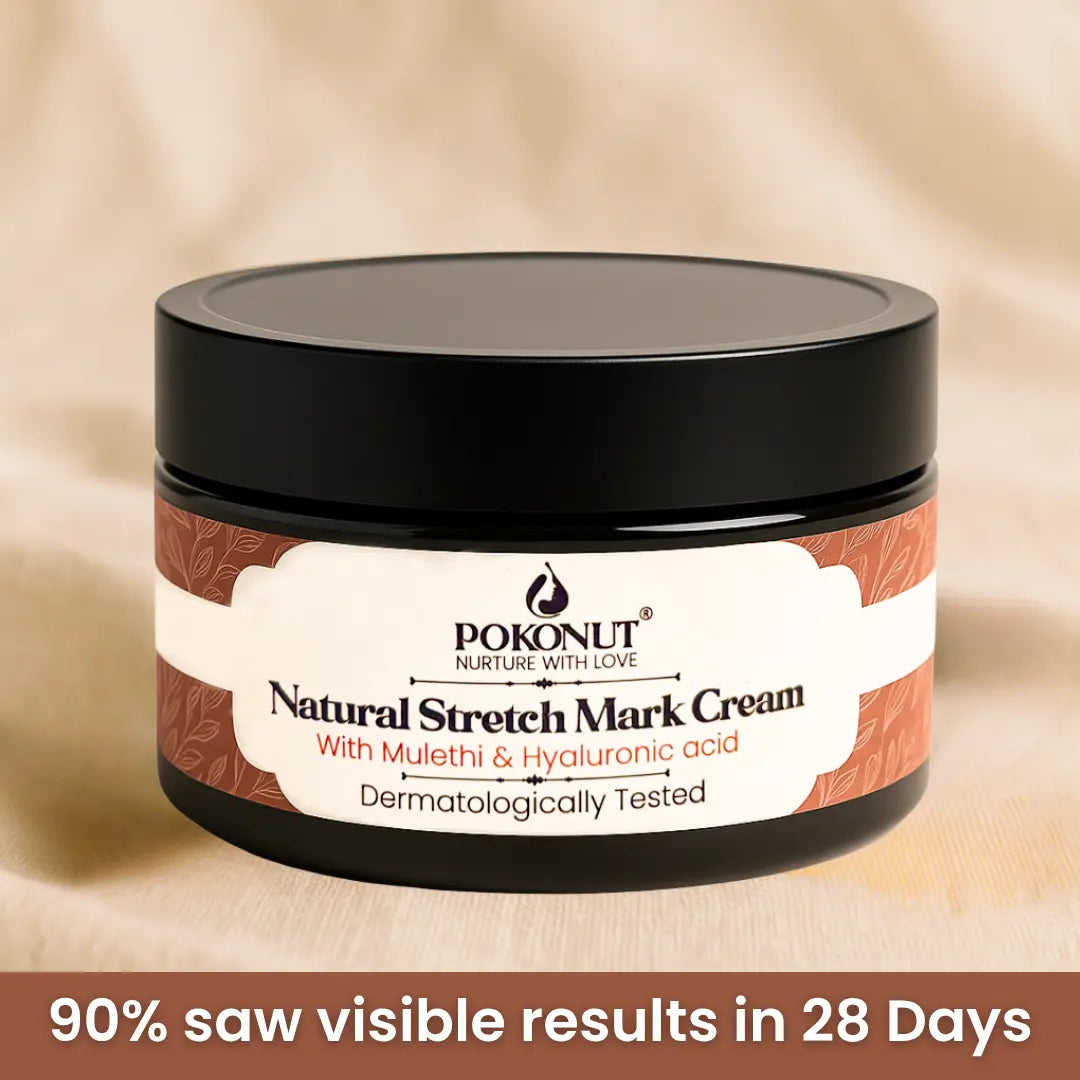
Pokonut Stretch Mark Cream
Stretch marks show up when skin stretches faster than it can rebuild during pregnancy, a growth spurt, a weight...
Shop Now →How to Use Shea Butter for Stretch Marks and Scars
For best results, apply shea butter once or twice a day, ideally on damp skin after a shower, and massage it in gently. Consistency is what makes the difference, as benefits build gradually over weeks and months. Follow these simple steps:
-
Apply after a shower. Damp skin locks in moisture better, so apply while your skin is still slightly wet.
-
Massage in circular motions. Gentle massage helps absorption and improves circulation to the area, which supports healing.
-
Use it daily. Apply once or twice a day, every day, for the best chance of visible improvement.
-
Pair it with other actives. Shea butter hydrates but does not actively rebuild skin, so a shea butter cream for stretch marks that also includes elasticity-supporting ingredients like hyaluronic acid, rosehip, and mulethi gives skin more support than shea alone.
-
Be patient. Expect gradual softening over months, especially on newer marks, rather than quick results.
If you have a nut allergy, patch test first, as shea butter comes from a tree nut.
Shea Butter With Other Ingredients
Shea butter works even better when combined with ingredients that support skin elasticity and repair. On its own, shea is an excellent moisturiser, but it does not actively rebuild the skin's structure. Ingredients like hyaluronic acid add deep hydration, rosehip oil nourishes and supports tone, mulethi helps calm and brighten, and centella asiatica supports collagen and healing. A formula that blends shea butter with these actives gives stretched or scarred skin more to work with, which is why many stretch mark creams pair them together rather than relying on shea alone.
Are There Any Side Effects of Shea Butter?
Shea butter is generally safe for most people, but a few side effects are possible:
-
Its rich and oily texture may clog pores and cause breakouts in some acne-prone people, especially when used on the face. The American Academy of Dermatology specifically notes that products containing oils such as shea butter can clog pores in acne-prone areas.
-
Rarely, shea butter may cause skin irritation or an allergic contact reaction. Such reactions have been reported, but they appear to be uncommon.
-
People with sensitive skin should patch test a new shea butter product before applying it to a larger area.
-
Having a tree-nut allergy does not automatically mean you will react to shea butter. Allergy experts report that reactions to shea are extremely rare, and shea nuts are generally well tolerated by people with tree-nut allergies.
-
If you notice redness, itching, swelling, or irritation after using it, stop using the product and consult a dermatologist if the reaction continues.
When to See a Dermatologist
You should see a dermatologist if your stretch marks or scars bother you and do not improve with consistent home care, or if you want real, structural change. Since shea butter and other creams can only improve appearance, deeper results need clinical treatments. Options like microneedling, laser therapy, and chemical peels work in the deeper layers of skin to rebuild collagen and reduce marks more noticeably. A dermatologist can assess your marks and recommend the right treatment for your skin type and the age of your marks.
About Doctor :