











What Is the Difference Between Red and White Stretch Marks?
- 1 What Are Red Stretch Marks (Striae Rubra)?
- 2 What Are White Stretch Marks (Striae Alba)?
- 3 Red vs White Stretch Marks: Key Differences
- 4 Why Does the Colour Change Over Time?
- 5 Which Are Easier to Treat — Red or White?
- 6 How to Treat Red Stretch Marks
- 7 How to Treat White Stretch Marks
- 8 Can You Prevent Stretch Marks from Turning White?
- 9 When to See a Dermatologist
- 10 The Bottom Line

Medically Reviewed By:
Dr. Mousumi Dash, BAMS
Written by Our Editorial Team
Dr. Mousumi Dash, BAMS
Written by Our Editorial Team
Medically Reviewed By:About the Reviewer
The main difference between red and white stretch marks is their age, not their type. Red or purple marks, known medically as striae rubra, are new and still healing. White or silver marks, called striae alba, are older marks that have settled into mature scars. The colour comes from what is happening under the skin: when skin stretches and the middle layer (the dermis) tears, tiny blood vessels show through and make fresh marks look red. Over time those vessels shrink and pigment fades, leaving the marks pale. This difference matters because red marks respond to care far better than white ones.
Key Takeaways
-
Colour shows the age of a stretch mark, not a separate condition.
-
Red marks (striae rubra) are new; white marks (striae alba) are old and healed.
-
Red marks are easier to fade because blood flow and collagen activity are still present.
-
White marks behave like mature scars and respond very little to creams.
-
Starting care early, while marks are red, gives the best long-term results.
What Are Red Stretch Marks (Striae Rubra)?
Red stretch marks are the early, active stage of a stretch mark, when the skin is still inflamed and healing. They appear red, pink, or purple because the skin has recently torn and the small blood vessels underneath show through the thinned surface. At this stage the marks may feel slightly raised, and the skin often itches as it stretches. Because the area still has active blood flow and the body is still remodelling collagen, this is the most responsive stage. Red marks are common during pregnancy, growth spurts, and periods of quick weight or muscle gain, and they can show up on the stomach, breasts, thighs, hips, and upper arms.
What Are White Stretch Marks (Striae Alba)?
White stretch marks are the mature, healed stage of a stretch mark, when the redness has faded and the mark has become a settled scar. As a mark ages, usually over about six to twelve months, the inflammation calms down, the blood vessels shrink back, and the skin loses collagen and pigment (melanin) in that spot. This leaves thin white or silver lines that can look slightly sunken or feel different in texture from the skin around them. Because blood flow and pigment are reduced, white marks behave like old scars and change very little on their own. They are harmless, but they are also the harder of the two to improve.
Red vs White Stretch Marks: Key Differences
The difference between red and white stretch marks comes down to their stage, colour cause, texture, and how easily they respond to treatment. The table below sums it up.
|
Feature |
Red stretch marks (striae rubra) |
White stretch marks (striae alba) |
|
Age |
New and recent |
Old and healed |
|
Colour |
Red, pink, or purple |
White or silver |
|
Why that colour |
Blood vessels show through torn skin |
Blood vessels have shrunk; pigment has faded |
|
Texture |
Slightly raised, sometimes itchy |
Flat or slightly sunken |
|
Skin activity |
Still inflamed and remodelling collagen |
Settled, scar-like tissue |
|
Ease of treatment |
Easier to fade |
Harder to fade |
Why Does the Colour Change Over Time?
The colour changes because a stretch mark moves through the normal stages of wound healing. When skin first tears, the area becomes inflamed and blood vessels widen, which creates the red or purple colour. As healing continues, that inflammation settles, the blood vessels narrow and recede, and the body slowly rebuilds the area with scar tissue that contains less collagen and less pigment. The result is a pale, flat mark. This shift usually happens over six to twelve months, though the pace varies with your skin tone, the cause, and how your body heals. Some marks fade so quickly that they never show an obvious red stage, which is why certain marks from growth spurts or muscle gain can look white from the start.
Which Are Easier to Treat — Red or White?
Red stretch marks are much easier to treat than white ones. At the red stage, the skin still has active blood flow and is still producing and reorganising collagen, so it responds well to consistent hydration, gentle care, and skin-supporting ingredients. White stretch marks are settled scars with reduced blood supply and collagen, so creams and oils do far less for them. This is the single most useful thing to know about stretch mark colour: the earlier you begin caring for a mark, while it is still red, the better your chances of reducing how visible it becomes later.

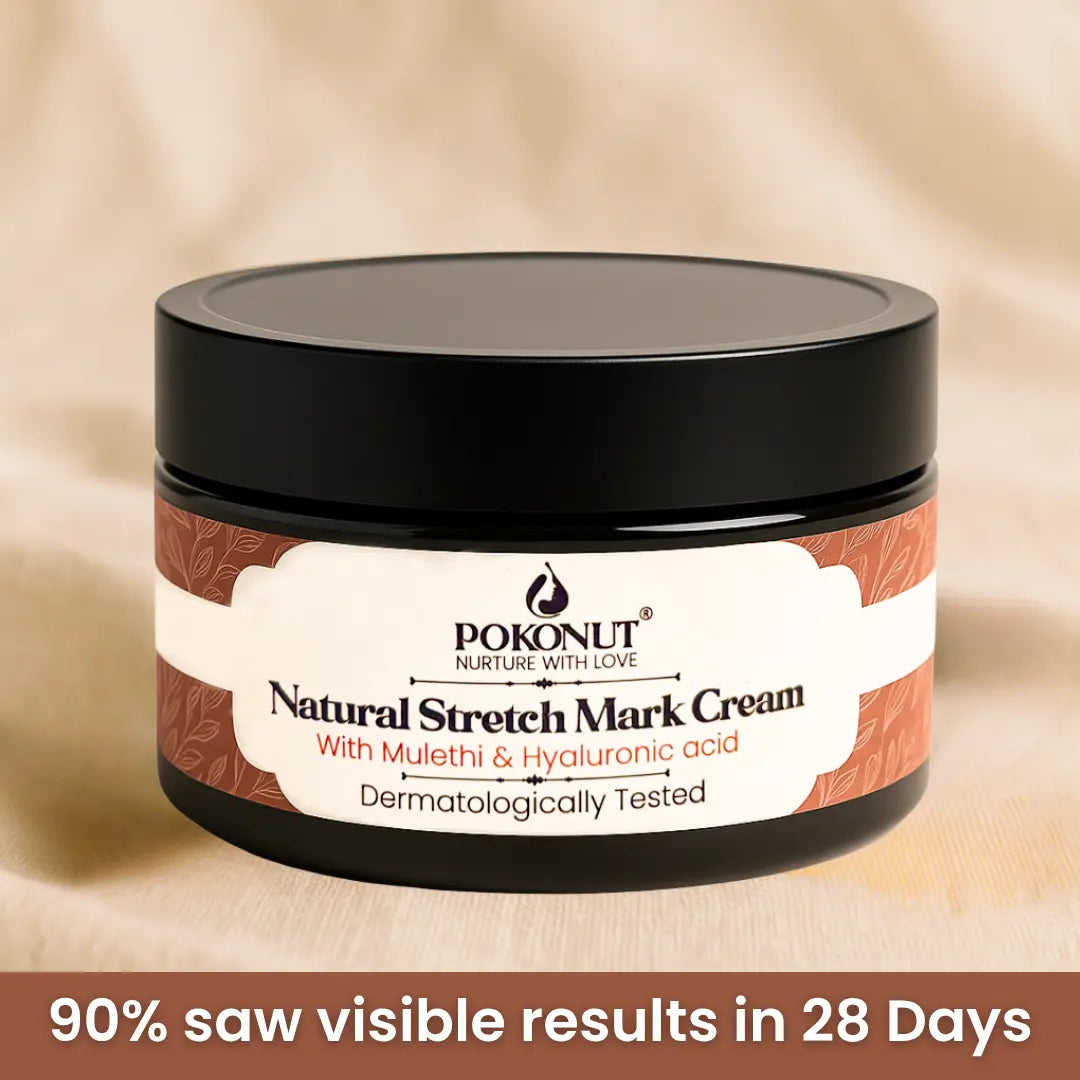
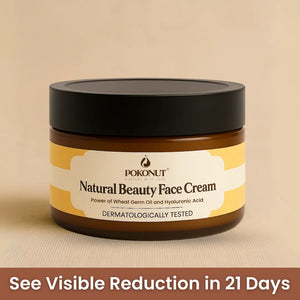
Pokonut Stretch Mark Cream
Stretch marks show up when skin stretches faster than it can rebuild during pregnancy, a growth spurt, a weight...
Shop Now →How to Treat Red Stretch Marks
Red stretch marks respond best to early, consistent care that keeps the skin hydrated and supports its natural repair. A simple, effective routine includes:
-
Moisturise daily. Well-hydrated skin is more flexible and heals more comfortably. Apply to slightly damp skin after a bath to lock in moisture.
-
Use skin-supporting actives. Ingredients like hyaluronic acid, rosehip, and centella asiatica help hydration and elasticity while the skin is still remodelling.
-
Choose a cream that does both. A stretch mark removal cream that combines hydration with elasticity-supporting ingredients such as hyaluronic acid, rosehip, and mulethi gives the skin the most support while marks are still red and responsive.
-
Pick pregnancy-safe formulas if expecting. During pregnancy, avoid retinoid-based creams and choose gentle, pregnancy-safe moisturisers instead.
-
Massage the area. Gentle circular massage improves circulation and encourages consistent use.
-
Protect from the sun. UV exposure can make marks more noticeable, so use sunscreen on exposed areas.
-
Be patient and consistent. Results build over weeks, not days.
How to Treat White Stretch Marks
White stretch marks are harder to fade and usually need professional treatment for a real difference. Because they are mature scars with little blood supply, creams mainly keep the skin soft rather than remove the marks. For visible improvement, dermatologists offer stretch mark treatment options that work deeper in the skin:
-
Microneedling creates tiny controlled injuries that trigger new collagen.
-
Fractional laser therapy stimulates skin renewal and improves texture and colour.
-
Radiofrequency treatments tighten and rebuild the deeper layers.
These treatments reduce the appearance of white marks rather than erase them, and they usually need several sessions over weeks or months. A dermatologist can advise which option suits your skin and the depth of your marks.
Can You Prevent Stretch Marks from Turning White?
You cannot stop stretch marks from fading to white, because that is simply the natural end of the healing process. What you can influence is how noticeable they end up looking. Treating marks while they are still red and active, when the skin can respond, gives the best chance of minimising their long-term appearance. Keeping skin hydrated, starting care early during pregnancy or weight change, and staying consistent all help. Once a mark has turned white, prevention is no longer the goal, and the focus shifts to professional treatments if you want to reduce it further.
When to See a Dermatologist
You should see a dermatologist if your stretch marks appear suddenly, spread quickly, or come with other unusual symptoms. In most cases stretch marks are harmless and simply a normal response to the skin stretching. But rapid, widespread marks alongside symptoms like easy bruising, muscle weakness, or unexplained weight gain can occasionally signal an underlying hormonal condition, such as Cushing's syndrome, and should be checked. A dermatologist is also the right person to see if you want clinical treatment for older white marks, or if you are unsure which products are safe for your skin or during pregnancy.
The Bottom Line
The difference between red and white stretch marks is really about time. Red marks are new, still healing, and the easiest to improve, while white marks are older, settled scars that respond far less to creams. The most practical takeaway is to act early: care for marks while they are still red, keep skin hydrated and protected from the sun, and stay consistent. For white marks that bother you, a dermatologist can suggest treatments that work deeper than any cream can.
About Doctor :