







Why Do Stretch Marks Appear on Breasts?

Medically Reviewed By:
Dr. Mousumi Dash, BAMS
Written by Our Editorial Team
Dr. Mousumi Dash, BAMS
Written by Our Editorial Team
Medically Reviewed By:About the Reviewer
You've noticed thin lines on your breasts that weren't there before, and your first thought was probably whether something is wrong. So let's answer that first. Stretch marks appear on the breasts when breast tissue grows or shrinks faster than the skin's collagen and elastin can adapt to. Puberty, pregnancy, breastfeeding and rapid weight change are the usual triggers. They are a form of scarring in the skin itself — not a sign that anything is wrong with the breast. And they are far more common than most people realise: around 70% of girls develop stretch marks somewhere during puberty, and the breasts are one of the expected places. This guide covers what's actually happening under the surface, why some people get them and others don't, what genuinely helps, and the small number of breast changes that do need a doctor.
Key Takeaways
-
Breast skin gets stretched faster than it can adapt, and the support fibres give way.
-
Puberty is the most common cause of all, followed by pregnancy and breastfeeding.
-
Around 70% of adolescent girls get stretch marks; 43–88% of pregnancies involve them.
-
Hormones matter — cortisol in particular weakens the skin's elastic fibres.
-
They start red or purple and fade towards pale white over months to years.
-
They are harmless, and they are not a breast health problem.
-
This is not caused by not moisturising enough. How much give your skin has is largely inherited.
What Happens in the Skin When Breasts Grow Quickly
The middle layer of your skin gets pulled past what its support network can take, and the fibres tear.
Think of your dermis — the layer under the surface — as a flexible mesh. Collagen gives it strength, elastin gives it stretch and the ability to spring back. When breast tissue enlarges quickly, that mesh is pulled further and faster than it was built for. The fibres break and reorganise themselves, and what's left behind is a thin line of scar tissue. That's why a stretch mark often sits very slightly below the level of the skin around it, and why it feels a little different when you run a finger over it.
There's a second part to this that almost no article mentions, and it explains a lot. The damage isn't purely mechanical. Immune cells in the skin release enzymes called elastases, which break down elastic fibres in the middle layer of the dermis. So while the skin is being stretched physically, it's also being weakened chemically at the same time. The two things together are why the marks form as lines running in the direction the skin was pulled, rather than as random patches.
Why They Start Red and Turn White
The colour tells you how old a mark is — and how much it's still likely to respond to anything you do about it.
|
Stage |
What you see |
What it means |
|
Striae rubra |
Red, purple or dark brown, sometimes slightly raised |
New. Blood flow is still active and the skin is still remodelling. Most responsive stage |
|
Transitioning |
Fading to light brown or greyish |
Still responsive |
|
Striae alba |
Pale, silvery-white, slightly sunken, a little shiny |
Mature. Permanent, but far less noticeable |
This progression happens over months to a couple of years, and the fading is the normal course of things — not something you have to make happen. Most breast stretch marks become considerably less visible on their own with time. If you want to understand which stage yours are at and what that means, the red and white stretch marks comparison goes into more detail.
What Causes Stretch Marks on Breasts
Anything that changes breast size faster than the skin can keep pace with and anything that weakens the skin's elastic fibres while that's happening.
|
Trigger |
Why it affects the breasts |
|
Puberty |
Rapid breast development stretches the dermis. This is the most common cause of all, and breast stretch marks are very common in adolescent girls |
|
Pregnancy |
Rising hormone levels and breast enlargement stretch the skin. The breasts are a recognised site as pregnancy progresses |
|
Breastfeeding and postpartum changes |
Milk production and engorgement enlarge the breasts, then they shrink again afterwards — repeated stretching and recoil |
|
Weight gain or loss |
Extra fat and connective tissue enlarges the breasts. Rapid weight loss leaves skin with less ability to rebound |
|
Breast surgery |
Augmentation or reduction changes skin tension, and is a recognised cause |
|
Cortisol or steroid exposure |
Cortisol weakens elastic fibres. This is why Cushing's syndrome and long-term corticosteroid use both raise susceptibility |
Hormones deserve a mention of their own here. Pregnancy hormones appear to contribute directly, and cortisol — your main stress hormone — interferes with the cells that build collagen, reducing how much the skin can produce. So the skin is less able to repair itself at exactly the moment it's under the most mechanical strain. That's a genuinely unfair combination, and it's not something willpower affects.
Why Some People Get Them and Others Don't
Mostly genetics and the speed of the change — not anything you did or failed to do.
This is worth spelling out, because the assumption that stretch marks are a personal failing is extremely common and not supported by anything. A personal or family history of stretch marks is one of the strongest predictors there is. Younger age during pregnancy raises the risk. Bigger and faster changes matter more than the final size you end up at. And certain genetic and hormonal conditions increase susceptibility independently of everything else.
Researchers have also found measurable differences in the skin of people who are more prone lower levels of a hormone called relaxin, and differences in a structural protein called fibrillin. Which is to say: some people's skin is simply built with less give in it, and that was decided long before any of this happened.
So the thing that needs saying plainly: this is not the result of not moisturising enough. Skin elasticity varies enormously between people, and the single biggest factor in whether you get stretch marks is one you have no control over. If you did everything you were told to and still got them, that's not a failure on your part.
How Common Are Stretch Marks on Breasts?
Common enough that they're closer to a normal feature of a changing body than a condition. If you take one thing from this page, let it be this section.
|
Group |
Reported prevalence |
|
Adolescent girls |
70% develop stretch marks (compared with 40% of boys) |
|
Pregnancy |
43–88% of pregnancies |
|
Puberty, across studies |
6–86%, a wide range reflecting how differently studies define and count them |
|
With obesity |
43% |
Both of the dermatology references below name the breasts specifically as a common site — in adolescent girls alongside the thighs and buttocks, and in pregnancy alongside the abdomen. So the breasts aren't an odd or unexpected place to find them. They are one of the places this is most expected to happen.
The honest note on treatment
This should shape what you expect before you spend anything. The StatPearls dermatology review states that most clinical trials on stretch mark treatments "have been of low quality and involved small sample sizes." DermNet puts it even more bluntly, saying the available treatments "have not been proven to be effective."
Tretinoin, a prescription retinoid, showed some benefit on early red marks over six months in trials, but it isn't used during pregnancy or breastfeeding. Beyond that, the evidence for creams, lasers and needling is modest and inconsistent.
That isn't a reason to do nothing. It's a reason to aim at the right target: realistic improvement means fading, flattening and becoming less noticeable, over months. Anything promising removal is overselling.
References
-
DermNet. Stretch marks (striae). Read on DermNet
-
Mikes BA, Oakley AM, Patel BC. Striae distensae. StatPearls [Internet]. Treasure Island (FL): StatPearls Publishing; updated 2025. Read on NCBI Bookshelf
Do Breast Stretch Marks Go Away?
They fade substantially on their own, but they don't disappear completely.
It's worth being straight about this rather than hopeful. Stretch marks that appear during puberty very often fade to the point where they're barely noticeable, and dermatology guidance is that they generally need no treatment at all — time does most of the work. Pregnancy and postpartum marks also fade over the following months as the redness settles.
What nothing reliably does — no cream, no oil, no laser — is remove them entirely. The honest goal is flatter, paler and less visible. For most people that's enough, because what actually changes is that you stop noticing them.
If yours have already turned silvery-white and you're wondering whether anything is still worth doing, old stretch marks covers what realistically helps at that stage.

Pokonut Stretch Mark Cream
Stretch marks show up when skin stretches faster than it can rebuild during pregnancy, a growth spurt, a weight...
Shop Now →What Actually Helps
Treat them while they're still red, keep the skin genuinely well moisturised, and expect a gradual result rather than a dramatic one.
-
Start while the marks are red. Every type of treatment studied works better on early marks than on mature white ones. This is the most useful single thing to know.
-
Use a rich emollient consistently. The evidence for individual active ingredients is modest, and reviewers have noted that the moisturising base itself appears to do much of the work. A thick cream you actually use daily beats a thin serum you abandon.
-
Look for centella asiatica, hyaluronic acid, rosehip oil and vitamin E. These are the ingredients with the most supportive evidence among the commonly available options.
-
Skip retinoids if you're pregnant or breastfeeding. Tretinoin has the best topical evidence of anything, and it is specifically not used in these situations. Save it for later and discuss it with your doctor.
-
Keep any product off the nipple and areola, and wash your hands before feeding if you're nursing.
-
Clinical options exist — fractional lasers, microneedling and radiofrequency — with modest and variable results. That's a dermatologist conversation, not a first step.
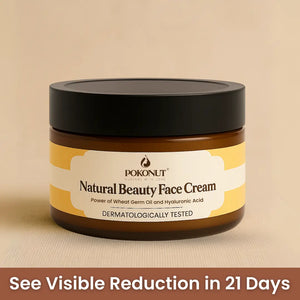
If you're looking for a breast stretch marks cream to use during pregnancy or afterwards, the things that matter are a genuinely rich base, no retinoids, and a formula gentle enough to keep using for months. The breast stretch marks cream from Pokonut is one example of that shape — a shea butter base carrying hyaluronic acid, rosehip oil and mulethi, formulated without retinoids, parabens or artificial fragrance, and intended for use on healthy, intact skin.
Two practical notes if you're in the postpartum window. Stretch mark cream safe ingredients covers what's cleared during pregnancy and nursing, and best stretch mark cream after delivery goes through how to choose one and when to start.
One thing worth saying directly if you're a teenager reading this. You don't need to buy anything. Stretch marks that appear during puberty are extremely common — most girls get them — and the standard dermatological advice is that they fade on their own and need no treatment. A plain moisturiser is plenty. This is your body growing, which is exactly what it's supposed to be doing.
Which Breast Changes Need a Doctor
Stretch marks themselves are harmless. A few other changes to breast skin are not, and the difference is worth knowing — not to worry you, but so you can tell them apart confidently.
A stretch mark is a flat or slightly sunken line that runs in the direction the skin was stretched. It doesn't pull the skin inward, it doesn't change the surface texture over an area, and it doesn't spread.
See a doctor if you notice any of the following:
-
Dimpling or puckering of the skin, or texture that looks like orange peel
-
A nipple that has turned inward when it didn't used to
-
Spreading redness, warmth or swelling of the breast
-
Scaling, crusting or persistent itching of the nipple or areola
-
A new lump, or thickening of the skin over one area
-
Stretch marks appearing with no obvious trigger — no pregnancy, no growth spurt, no weight change — especially alongside weight gain around the middle, easy bruising, or muscle weakness, which can point to a hormonal cause worth testing for
Anything that doesn't match the description of a flat line in the direction of stretch is worth showing to a doctor. It's very likely to be nothing, and that's a reasonable reason to go rather than a reason not to.
The Bottom Line
Stretch marks appear on the breasts because breast tissue grows or shrinks faster than the skin's collagen and elastin network can adapt — most often during puberty, pregnancy, breastfeeding or a rapid weight change, with hormones and cortisol reducing the skin's resilience at the same time. Around 70% of adolescent girls get them somewhere, and the breasts are one of the expected sites, so this is a normal feature of a changing body rather than a sign that anything is wrong. They start red and fade towards white, they respond best while they're still red, and they fade considerably on their own either way. And they are not the result of not moisturising enough — how much give your skin has was largely decided by your genes.
About Doctor :