









How to Fade Stretch Marks After Pregnancy: Effective Postpartum Solutions

Medically Reviewed By:
Dr. Mousumi Dash, BAMS
Written by Our Editorial Team
Dr. Mousumi Dash, BAMS
Written by Our Editorial Team
Medically Reviewed By:About the Reviewer
You can fade stretch marks after pregnancy and make them far less noticeable, but no cream can erase them completely. Stretch marks are a type of scar that forms when the skin stretches quickly, so they are a permanent change in the deeper skin. The good news is that they naturally fade over time, turning from red or purple to a lighter silver, and a gentle, consistent routine speeds this up. It also helps to remember that stretch marks are a normal, common part of pregnancy that most mothers experience. This guide covers safe, practical ways to soften and fade them after birth.
Key Takeaways
-
Stretch marks after pregnancy fade over time but rarely disappear fully.
-
Treating them early, while they are still red, gives the best results.
-
Hydration, gentle exfoliation, and massage all support fading.
-
Some ingredients, like retinoids, are not safe while breastfeeding.
-
Old white marks fade the least and may need a dermatologist for real change.
Why Do Stretch Marks Appear After Pregnancy?
Stretch marks appear after pregnancy because the skin stretched faster than it could adapt while the baby grew. As the belly expands, the middle layer of skin, called the dermis, tears as its collagen and elastin fibres break. Pregnancy hormones add to this by lowering collagen and making the skin more likely to tear. When the skin tears, small blood vessels show through, so new marks look red, pink, or purple. Over the following months the stretch marks fade to white or silver. They most commonly appear on the belly, breasts, hips, and thighs, and they are very common, affecting around eight in ten women during pregnancy.
Can You Fully Remove Stretch Marks After Pregnancy?
No, you cannot fully remove stretch marks after pregnancy, because they are scars in the deeper layers of skin. No cream or oil applied on top can rebuild that deeper structure, so complete removal is not realistic. What you can do is significantly improve how they look and feel. With consistent care, marks become softer, flatter, and less noticeable as they fade. For deeper or older marks, clinical treatments can go further than creams, but even these reduce marks rather than erase them. Setting this honest expectation early helps you focus on real, achievable results instead of chasing a full cure.

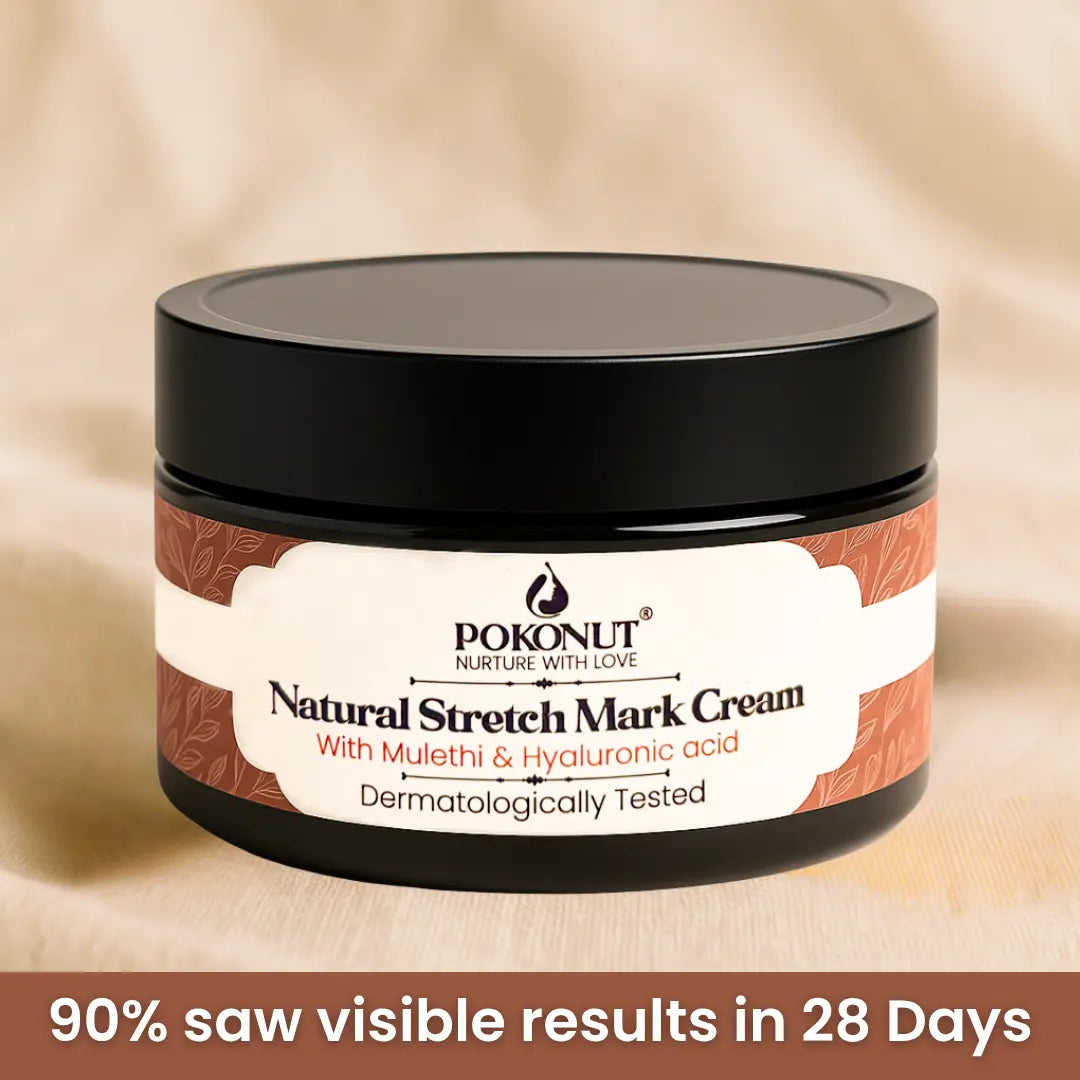
Pokonut Stretch Mark Cream
Stretch marks show up when skin stretches faster than it can rebuild during pregnancy, a growth spurt, a weight...
Shop Now →When Should You Start Treating Postpartum Stretch Marks?
You should start treating postpartum stretch marks as early as possible, because fresh marks respond far better than old ones. While marks are still red or purple, the skin is actively healing and has better blood flow, so it reacts well to hydration and gentle care. Once marks fade to white, they are settled scars and change very little with topical products. You can safely begin a gentle routine soon after birth, as long as you choose ingredients that are safe while breastfeeding. Starting a stretch mark removal cream after pregnancy early, and using it consistently, gives you the best chance of visibly softening the marks.
How to Fade Stretch Marks After Pregnancy: Step-by-Step
Fading stretch marks after pregnancy comes down to a few simple, consistent habits: moisturise, exfoliate, massage, and use safe actives. Together these improve skin texture and help marks fade faster.
Moisturise Daily
Keeping the skin well moisturised is the foundation of fading stretch marks. Hydrated skin is more elastic and looks smoother, which makes marks less obvious. Apply a rich moisturiser to your belly, hips, thighs, and breasts once or twice a day, ideally on slightly damp skin after a bath to lock in moisture.
Exfoliate Gently
Gentle exfoliation removes dead surface cells and helps your skin renew itself. Use a mild scrub, such as a coffee or sugar scrub, once or twice a week on the affected areas. This improves texture and helps the skin absorb the products you apply afterwards. Avoid harsh scrubbing, which can irritate the skin.
Massage the Area
Massaging stretch marks increases blood flow to the area and supports the skin's healing. Spend a few minutes massaging your moisturiser or oil into the marks in gentle circular motions. Regular massage also keeps you consistent with your routine, which is what really drives results.
Use Safe Topical Actives
Certain ingredients can help improve the look of marks, but they must be safe for the postpartum period. Hyaluronic acid is the best-studied option, with research suggesting that massaging it into newer marks may make them less noticeable, and centella asiatica and peptides can also support skin repair. Look for the best stretch mark removal cream after pregnancy that combines these with gentle, breastfeeding-safe ingredients like rosehip, mulethi, and shea butter, and avoid retinoids (retinol or tretinoin) and hydroquinone while breastfeeding, as these are not recommended.
Stay Hydrated and Eat Well
Healthy skin heals better from the inside out. Drink plenty of water to keep skin cells hydrated, and eat a balanced diet rich in protein, vitamin C, vitamin E, and zinc, which all support collagen and skin repair. Good nutrition is one part of broader postpartum skin care that helps your skin recover alongside the rest of your body.
Gentle Postpartum Exercise
Light exercise, once your doctor clears you, helps tone the muscles under the skin and supports overall recovery. Gentle activities like walking or postpartum-safe stretching improve circulation and firmness over time. Always wait for medical clearance before starting, especially after a caesarean.
Natural Remedies That Help (and What Doesn't)
Natural remedies can support fading by keeping skin soft and hydrated, but they improve appearance rather than remove marks. The most useful ones work mainly by moisturising:
-
Shea and cocoa butter. Rich, nourishing butters that deeply hydrate and soften stretched skin.
-
Coconut and almond oil. Light plant oils that lock in moisture and ease dryness and itching.
-
Aloe vera. Soothes and calms irritated skin and supports its natural healing.
-
Massage with oil. Combines hydration with improved circulation for better skin comfort.
It is worth being realistic, though. These remedies help skin look and feel better, but they cannot rebuild the deeper skin structure, and several heavily marketed "miracle" cures have little scientific evidence behind them. Use them as gentle support alongside a consistent routine, not as a guaranteed fix.
Clinical Treatments for Stubborn Stretch Marks
For stubborn or old white stretch marks that do not fade with home care, dermatologists offer treatments that work deeper in the skin. Because these marks are settled scars, they need methods that rebuild collagen rather than just hydrate the surface. Common options include:
-
Microneedling. Tiny needles create controlled micro-injuries that trigger the skin to produce fresh collagen, gradually smoothing and softening the marks.
-
Fractional laser therapy. Targeted laser energy resurfaces the skin and stimulates collagen, improving both the colour and texture of stretch marks over several sessions.
-
Radiofrequency treatments. These heat the deeper layers of skin to tighten and rebuild them, helping firm the area around the marks.
-
Surgical tummy tuck. In rare cases of loose lower-belly skin after pregnancy, surgery can remove the affected skin, though this is a major procedure, not a routine option.
These treatments reduce the appearance of marks rather than erase them, usually need several sessions, and are best started after you have finished breastfeeding. A dermatologist can advise which option suits your skin.
How Long Do Postpartum Stretch Marks Take to Fade?
Postpartum stretch marks usually fade gradually over about six to twelve months after birth. During this time, the red, pink, or purple colour softens as the skin heals, and the marks turn paler and flatter, becoming much less noticeable. How quickly this happens depends on your skin, the depth of the marks, and how consistent you are with your routine. Newer marks fade the most, while old white marks improve the least with creams alone. The key is patience and consistency, as fading is a slow, natural process that cannot be rushed.
When to See a Dermatologist
You should see a dermatologist if your stretch marks bother you and are not improving with consistent home care, or if you want faster, deeper results. A professional can assess your marks and recommend treatments like microneedling or laser that work beyond what creams can do. This is especially worth considering for old white marks, which respond very little to topical products. It is usually best to wait until you have finished breastfeeding before starting stronger clinical treatments, and a dermatologist can guide you on the safest timing and options for your skin.
About Doctor :