









Can Hormonal Imbalance Cause Pigmentation?

Medically Reviewed By:
Dr. Mousumi Dash, BAMS
Written by Our Editorial Team
Dr. Mousumi Dash, BAMS
Written by Our Editorial Team
Medically Reviewed By:About the Reviewer
You've probably been told it's just tanning. It usually isn't. Yes, hormonal changes can cause pigmentation — most often as melasma, the soft brown or greyish patching that settles on the cheeks, forehead and upper lip. Estrogen and progesterone are the main culprits, which is why it shows up during pregnancy, after starting the pill, on hormone therapy, or in the week before your period. It happens to somewhere between 14.5% and 56% of pregnant women, so if this is you, you are nowhere near alone. Here's the part worth knowing: hormones can't do this on their own. They need sunlight to pull it off — and that's the piece you can actually control.
Key Takeaways
-
Hormonal pigmentation is real, and melasma is what it usually looks like.
-
Estrogen and progesterone drive it — pregnancy, the pill, HRT and your monthly cycle.
-
Hormones only amplify pigment. Sunlight is what sets it off, and that you can control.
-
Velvety dark patches on the neck or underarms are a different problem altogether, usually insulin.
-
Most hormone blood tests come back normal in melasma, so a test is rarely the answer.
-
On Indian skin, visible daylight matters as much as UV — a clear sunscreen isn't enough.
-
Melasma can be managed well, but it does come back. That's the condition, not your routine failing.
What Counts as Hormonal Pigmentation?
Hormonal pigmentation almost always means melasma — flat brown or greyish patches, usually symmetrical, sitting across the cheeks, forehead, upper lip or jawline. If you have it, you'll know the shape of it well: it doesn't come up as neat round spots like acne marks do, but as soft-edged patches that look a little like a shadow falling across your face.
What makes it "hormonal" is the timing. It tends to appear or deepen in the moments your hormones shift — a pregnancy, a new contraceptive pill, starting hormone therapy around menopause, or predictably every month in the days before your period. That timing is the clue most people notice before anyone names the condition for them.
But here's the qualification that changes everything about how you treat it. Hormones are the trigger, not the whole story. Genetics decide whether you're susceptible at all, and sunlight is what actually activates the process. Hormonal change on its own, in skin that never sees light, tends not to produce pigmentation. It's also worth saying plainly that "hormonal imbalance" is a phrase people use very loosely. It sounds like something a blood report will reveal in bold letters. In most melasma, that report comes back completely normal — and that doesn't mean your hormones aren't involved.
Which Hormonal Situations Actually Cause Pigmentation
Four situations have genuine evidence behind them. A few others get blamed constantly on much thinner grounds, and knowing the difference saves you from chasing the wrong explanation for months.
-
Pregnancy — the most strongly documented trigger by a wide margin, and the reason melasma got the nickname "the mask of pregnancy."
-
The pill and hormone replacement therapy — a well-recorded association, and one of the most common reasons melasma turns up in someone who has never been pregnant.
-
Your monthly cycle — melasma often darkens in the second half of the cycle, when estrogen and progesterone peak. If yours looks worse some weeks than others, you're not imagining it.
-
Adrenal and pituitary conditions — Addison's and Cushing's disease do darken skin, but through an entirely different hormone pathway, and they come with other symptoms you'd notice.
-
Thyroid problems — linked to melasma in several studies, but controlled research disagrees with itself, so treat thyroid as a possible contributor rather than a confirmed cause.
-
PCOS — the evidence for facial melasma specifically is weak and inconsistent. PCOS does cause a different kind of darkening, and it gets mixed up with this one constantly. More on that below.
Hormonal Pigmentation: What the Research Shows
Melasma is one of the better-studied pigmentation conditions, which is good news when you're trying to work out what's true. The figures below come from published medical reviews rather than from product marketing — a distinction that matters a lot here, because some genuinely inflated numbers get repeated across the internet on this topic.
|
Hormonal situation |
What the evidence shows |
|
Pregnancy |
Melasma affects roughly 14.5–56% of pregnant women across studies. Raised estrogen, progesterone and melanocyte-stimulating hormone all increase production of the enzymes that build melanin, including tyrosinase. |
|
The pill / HRT |
Reported melasma prevalence sits at 8–34% among users of oral contraceptives or hormone replacement therapy. |
|
Monthly cycle |
A review of cycle-linked pigmentation found melasma commonly worsens in the luteal phase, when estrogen and progesterone peak. The studies are small, but they point consistently the same way. |
|
Endocrine conditions |
Thyroid disease, ovarian tumours and other endocrine problems have been associated with melasma — but the evidence for routine hormone abnormalities is mixed and much weaker than the pregnancy and contraceptive data. |
The finding that changes what you should do
This is the detail that reframes the whole topic, and it almost never makes it into consumer articles — which is a shame, because it's the most hopeful thing here.
In laboratory studies on real skin samples, estrogen on its own did not trigger pigment production at all. Estrogen combined with UVB did. When researchers added light to the equation, pigment started moving up into the surface skin cells. Without the light, the hormone did nothing visible.
In other words: hormones load the gun, sunlight pulls the trigger.
Think about what that means for you practically. You can't switch off a pregnancy. You often can't stop a medication you need, and you certainly can't opt out of your own monthly cycle. Those feel like dead ends, and if you've been reading about hormonal pigmentation for a while, you've probably hit that wall already. But you can change how much light reaches your face — completely, starting tomorrow morning. That's not a small consolation prize. It's the single most effective lever available, and it's the one in your hands.
References
-
Espósito ACC, Cassiano DP, da Silva CN, et al. Update on Melasma — Part I: Pathogenesis. Dermatology and Therapy, 2022. Read on NCBI/PMC
-
Handel AC, Miot LDB, Miot HA. Melasma: a clinical and epidemiological review. Anais Brasileiros de Dermatologia, 2014;89(5):771–782. Read on NCBI/PMC
Further supporting work includes Cario (Experimental Dermatology, 2019) on how hormones affect pigmentation in laboratory skin models, Kim et al. (Journal of Clinical and Aesthetic Dermatology, 2020) on cycle-linked pigmentation, Lee (Pigment Cell & Melanoma Research, 2015) on melasma pathogenesis, and Sachdeva (2018) on melasma in men.
How Hormones Make Skin Darker
Estrogen and progesterone talk directly to your pigment-making cells, because those cells carry receptors built to receive exactly those hormones. That direct line is why hormonal change shows up on skin so reliably — it isn't a vague knock-on effect, it's a signal being delivered to the right address.
Here's what happens when it arrives. The hormones switch on the genes that build melanin and crank up tyrosinase, the enzyme that kicks off the whole process. Then they encourage more of the finished pigment to move upward into your surface skin cells, which is the layer you actually see. So your skin starts making more pigment and delivering more of it to the surface. The two effects stack, and a few weeks later you notice a patch that wasn't there before.
And this is where the light comes back in. All of this machinery runs much harder when light is also landing on the skin. It's worth pausing on something you've probably already observed without naming it: your hormones circulate everywhere in your body, equally. So why does melasma sit on your cheeks and upper lip, and never on your stomach or your back? Because those areas stay covered. The hormones reached them too — the sunlight didn't.
Melasma vs PCOS Darkening: Two Different Problems
Hormones cause two completely different kinds of darkening, and mixing them up is the single most common reason people spend money for months on something that was never going to work.
|
Melasma |
Acanthosis nigricans |
|
|
Where it shows up |
Cheeks, forehead, upper lip, jawline |
Neck, underarms, groin, knuckles, skin folds |
|
What it looks like |
Flat brown or greyish patches |
Velvety, slightly thickened, darker skin |
|
Driven by |
Estrogen and progesterone, plus sunlight |
Insulin resistance, very common in PCOS |
|
What helps |
Sun protection and brightening actives |
Managing insulin and weight, plus gentle exfoliation |
|
The key difference |
Sunlight is the amplifier |
Sunlight has almost nothing to do with it |
There's a two-second test you can do right now. Run a fingertip over the dark area. Melasma is completely flat — only the colour has changed, the texture hasn't. Acanthosis nigricans feels slightly raised and velvety, a bit like soft suede, because the skin cells there have actually multiplied rather than just darkened.
That one difference decides your whole approach. If your darkening is on the neck, underarms or groin and feels velvety, it isn't really a pigment problem — it's your body signalling something about insulin, and brightening creams will barely touch it. Plenty of women spend a year scrubbing at a dark neck before anyone tells them this. The real work is managing insulin resistance with your doctor. Alongside that, gentle chemical exfoliation genuinely helps the surface — an underarm roll on with salicylic acid works on that thickened layer without the harsh scrubbing that usually makes these areas darker, not lighter. Before you buy anything at all, it's worth being clear on whether you're dealing with pigmentation and dark spots or with something structural.
Does Hormonal Pigmentation Affect Men?
Yes — less often, but it happens, and it gets missed constantly. Men make up a real minority of melasma cases, and in them sun exposure and genetics usually matter more than hormones do. The bigger issue is that melasma is so widely assumed to be a women's condition that darkening on a man's cheeks or forehead gets written off as tanning and left alone for years. The treatment is no different: sun protection first, then gentle actives, and the same patience.
Do You Need a Hormone Test?
Probably not, if melasma is your only symptom — which is almost certainly the opposite of what you expected to read here.
It's a reasonable thing to want. Something has clearly changed on your face, and a blood test feels like the obvious way to find out what. But in typical melasma, hormone tests come back normal, and the research linking it to measurable hormone abnormalities contradicts itself. Testing every woman who develops facial pigmentation would mostly produce normal reports, a bill, and no change at all to the treatment.
What makes a test genuinely worthwhile is other symptoms alongside the pigmentation. Worth getting checked if you also have:
-
Irregular or missing periods, excess facial hair, or trouble conceiving — which points towards PCOS.
-
Constant fatigue, unexplained weight change, hair thinning, or feeling cold when nobody else does — which points towards your thyroid.
-
That velvety darkening on your neck or underarms, which is worth a blood sugar and insulin check rather than a cream.
-
Darkening of your gums, palm creases or old scars, especially with low blood pressure, salt cravings or weight loss. This combination needs seeing about promptly.
The same thinking applies to the other internal causes people worry themselves about. Pigmentation on the backs of the hands and knuckles rather than the face, for instance, is a different question entirely — that's when vitamin B12 deficiency pigmentation becomes worth ruling out. In every case it's the pattern plus the symptoms that decide whether a test tells you anything useful.
Why Sunscreen Matters More Here Than Anywhere Else
Because sunlight is the thing hormones need, sun protection isn't a supporting step in treating hormonal pigmentation. It is the treatment. Everything else you put on your face is working on top of it.
And there's a detail here that almost nobody mentions, which matters enormously on Indian skin. Visible light drives melasma too — not just UV. That means ordinary daylight. The light coming through your kitchen window. The ten-minute walk to the shop. The drive to work with the window down. Deeper skin tones respond more strongly to visible light than lighter ones do, and this is the uncomfortable part: SPF only measures UVB protection. A clear sunscreen, however high the number on the bottle, is doing part of the job and leaving the rest.
What that looks like in practice:
-
Broad-spectrum SPF 50, every single day — including indoors if you sit near a window, on grey days, and right through monsoon. Cloud cover is not protection.
-
Reapply every two to three hours on any day you're actually out and about.
-
Choose tinted formulas, or ones with iron oxides — the tint is currently the main way to block visible light, and a clear formula simply can't do it.
-
Use shade as a tool. A cap, an umbrella, moving your desk away from the window. Free, and it works.
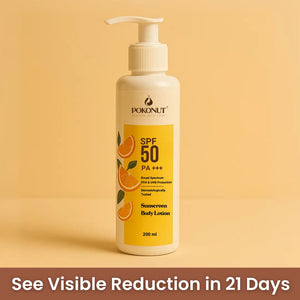
A sunscreen SPF 50 applied consistently will do more for hormonal pigmentation than any corrective cream used without one. Skip it, and you're patiently fading pigment while the trigger keeps firing every morning.
What Actually Helps Hormonal Pigmentation on the Face
Melasma responds to gentle and consistent, not strong and fast. This runs completely against instinct — when a patch won't budge, everything in you wants to reach for something more powerful. Resist it. Melasma flares when skin gets irritated, so the harsh approach very often leaves you worse off than when you started, and a month further behind.
The approach with the best support is a combination of mild actives hitting the pigment pathway at two different points. Niacinamide slows the pigment being delivered up to your skin's surface. A tyrosinase blocker like kojic acid works one step earlier, slowing how much gets made in the first place. Covering both ends beats pushing a single ingredient harder, and crucially it stays comfortable enough that you'll still be using it in month three — which is when it starts to matter.
What to look for on a label:
-
Niacinamide at a real strength, around 10%, not just listed somewhere with no percentage attached.
-
A tyrosinase blocker alongside it, such as kojic acid — rather than eight actives at token amounts.
-
A hydrating base with something like hyaluronic acid, because dry, irritated skin pigments more readily.
-
Hydroquinone-free, since this needs to be safe to use for months, not weeks.
-
No fairness or bleaching promises. You're after your own even tone, and anything claiming more than that within days isn't being straight with you.
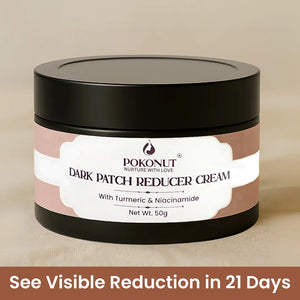
Used at night alongside daily sun protection, a dark spot removal cream built this way works on the patching, unevenness and blotchiness that hormonal change leaves behind. Give it 8 to 12 weeks before you judge it, and longer for melasma that's been there a while — it's worth knowing how long does niacinamide take to fade dark spots before you start, purely so the slow middle stretch doesn't make you quit. If you've given it a fair run and it hasn't moved, azelaic acid for pigmentation has stronger clinical evidence for melasma specifically and is worth raising with a dermatologist.
One honest thing, because it saves a lot of unnecessary disappointment: melasma is managed, not cured. It often returns in a second pregnancy, on hormonal medication, or after a summer where the sunscreen slipped. When that happens it isn't your routine failing and it isn't your fault — it's simply how this condition behaves. Steady protection is what holds a good result in place.
Pigmentation During Pregnancy: What's Safe
Most pregnancy melasma fades on its own within a few months of delivery. So if you're pregnant and watching it spread across your cheeks right now, the most useful thing to know is that protecting your skin matters far more than treating it — and that waiting is a perfectly legitimate plan, not giving up.
While you're pregnant or breastfeeding, retinoids and hydroquinone are off the table. Niacinamide and vitamin C are generally considered gentler choices, and sunscreen is both completely safe and the most useful thing in your cupboard. Run anything you're applying past your doctor first, including products labelled natural or herbal — safety during pregnancy depends on the specific ingredient, not on how the packaging describes it. If the pigmentation is still there well after delivery, that's the point to start treating it properly, and postpartum skin care covers how to bring actives back in sensibly once feeding is done.
When to See a Doctor
Pigmentation on its own rarely needs urgent attention. Pigmentation plus other symptoms sometimes does. Book an appointment if:
-
It came with irregular periods, unexplained weight change, or fatigue you can't put down to a busy few months.
-
Your neck or underarms have darkened and feel velvety — worth a blood sugar and insulin check.
-
Melasma keeps coming back or spreading even though you've been consistent with sunscreen and given treatment a fair run.
-
Your gums, palm creases or old scars have darkened, particularly alongside dizziness, low blood pressure or weight loss. Don't sit on this one.
The Bottom Line
Hormonal change can absolutely cause pigmentation, and melasma is what it usually looks like — pregnancy, the pill, hormone therapy and your monthly cycle being the best-documented triggers. But hormones never work alone. They amplify a process that light sets off, which means the most effective thing you can do isn't chasing a hormone test. It's blocking the light that lets them work, and on Indian skin that means a daily broad-spectrum SPF 50, ideally tinted. If your darkening is on the neck or underarms and feels velvety instead of flat, that's insulin rather than pigment and needs a different conversation entirely. And while melasma can be managed well, it does come back — so steady protection will always do more for you than any single hero ingredient.
About Doctor :