









What Peptides Are Good for Stretch Marks?
- 1 What Are Peptides and How Do They Work on Stretch Marks?
- 2 What Peptides Are Good for Stretch Marks?
- 2.1 Copper Peptides
- 2.2 Palmitoyl Tripeptide-1
- 2.3 Palmitoyl Tetrapeptide-7
- 2.4 Palmitoyl Pentapeptide-4
- 2.5 Heptapeptide-7
- 2.6 Matrixyl-Based Peptides
- 2.7 Collagen Peptides
- 3 Which Peptides Work Best for New vs Old Stretch Marks?
- 4 Ingredients That Work Well With Peptides for Stretch Marks
- 4.1 Hyaluronic Acid
- 4.2 Niacinamide
- 4.3 Centella Asiatica
- 4.4 Vitamin E and Antioxidants
- 5 How Long Do Peptides Take to Show Results on Stretch Marks?
- 6 Can Peptides Remove Stretch Marks Completely?
- 7 Final Takeaway

Medically Reviewed By:
Dr. Mousumi Dash, BAMS
Written by Our Editorial Team
Dr. Mousumi Dash, BAMS
Written by Our Editorial Team
Medically Reviewed By:About the Reviewer
Stretch marks form when the skin stretches faster than its collagen and elastin fibres can adapt. This commonly happens during pregnancy, rapid weight changes, puberty or muscle gain. As these fibres tear within the deeper layer of the skin (dermis), stretch marks appear first as red or purple lines and gradually become white or silvery over time. One important fact is that collagen makes up nearly 70–80% of the skin's dry weight, making it one of the most important proteins responsible for skin strength and elasticity. Peptides are used in skincare because they may support collagen signalling, improve skin elasticity and help the skin repair itself. While they cannot completely remove stretch marks, they may gradually improve their appearance with consistent use.
What Are Peptides and How Do They Work on Stretch Marks?
Peptides are short chains of amino acids, which are the building blocks of proteins like collagen and elastin. In skincare, they work as signal molecules, meaning they communicate with skin cells called fibroblasts and encourage them to produce more collagen and support the skin's natural repair process.
Stretch marks develop when collagen and elastin fibres break due to excessive stretching. Since peptides support collagen production rather than replacing damaged tissue, they work best as ingredients that improve skin firmness, elasticity and texture over time. They are supportive ingredients, not instant treatments.
What Peptides Are Good for Stretch Marks?
1. Copper Peptides
Copper peptides are among the most researched peptides for skin repair. They help stimulate collagen and elastin production while supporting wound healing and tissue repair. This makes them useful for improving skin firmness and reducing the appearance of stretch marks over time. They are particularly beneficial for improving skin resilience and supporting long-term skin health.
2. Palmitoyl Tripeptide-1
Palmitoyl Tripeptide-1 is a signal peptide that encourages fibroblasts to produce collagen. As collagen production improves, the skin gradually becomes firmer and smoother. This peptide is commonly included in anti-ageing and skin-repair formulations because it helps improve skin texture and elasticity with regular use.
3. Palmitoyl Tetrapeptide-7
Stretch marks, especially new red ones, may involve mild inflammation in the skin. Palmitoyl Tetrapeptide-7 helps reduce inflammatory signals while supporting the skin's repair process. By calming the skin and supporting collagen production, it may improve the appearance of newer stretch marks over time.
4. Palmitoyl Pentapeptide-4
This peptide supports the production of collagen by activating natural repair pathways within the skin. It is widely used in skincare to improve firmness, elasticity and skin texture. Although results develop gradually, consistent application may help stretch marks appear smoother and less noticeable.
5. Heptapeptide-7
Heptapeptide-7 helps support fibroblast activity, the cells responsible for producing collagen and elastin. By encouraging healthy skin repair, it may improve elasticity and support the appearance of stretch marks, especially during the earlier stages when the skin is actively healing.
6. Matrixyl-Based Peptides
Matrixyl is a peptide complex that combines different signal peptides to support collagen renewal. Rather than working on only one pathway, Matrixyl targets multiple aspects of skin ageing and repair. It is commonly used to improve skin firmness, elasticity and overall smoothness, making it a valuable ingredient for long-term stretch mark care.
7. Collagen Peptides
Collagen peptides are smaller protein fragments commonly used in oral supplements and some topical formulations. While topical collagen does not replace the skin's own collagen, collagen peptides can support hydration and improve skin softness. They work best alongside ingredients that stimulate the skin's natural collagen production rather than acting as a direct treatment for stretch marks.
Which Peptides Work Best for New vs Old Stretch Marks?
|
Stretch Mark Type |
Peptides That May Help |
Why They May Help |
|
New red or pink stretch marks |
Copper Peptides, Palmitoyl Tetrapeptide-7, Heptapeptide-7 |
Support skin repair, collagen production and help calm early inflammation. |
|
Older white stretch marks |
Matrixyl Peptides, Palmitoyl Pentapeptide-4, Copper Peptides |
Help improve firmness, elasticity and skin texture over long-term use. |
|
Dry, rough stretch marks |
Collagen Peptides, Copper Peptides, Hydrating Peptide Blends |
Support hydration, improve skin softness and strengthen the skin barrier. |
Ingredients That Work Well With Peptides for Stretch Marks
Hyaluronic Acid
Hyaluronic acid helps attract and retain moisture within the skin. Well-hydrated skin appears softer and more flexible, which may reduce the visibility of stretch marks. It also supports the skin barrier and works well alongside peptides by improving overall skin hydration.
Niacinamide
Niacinamide helps strengthen the skin barrier and supports a more even-looking skin tone. It also improves skin elasticity and reduces moisture loss, making it a useful companion ingredient when treating stretch marks over time.
Centella Asiatica
Centella Asiatica, also known as Cica, has been widely used to support wound healing and collagen production. It contains compounds called triterpenoids, which may stimulate fibroblasts and improve skin repair. It is commonly included in stretch mark products because it supports skin elasticity and recovery.
Vitamin E and Antioxidants
Vitamin E helps protect the skin from oxidative stress caused by free radicals. Although it cannot remove stretch marks, it supports skin barrier health and helps keep the skin moisturized. When combined with peptides, antioxidants contribute to healthier-looking skin during the repair process.
How Long Do Peptides Take to Show Results on Stretch Marks?
Peptides work gradually because collagen production is a slow biological process. Most people first notice improvements in skin hydration and texture rather than colour.
-
2–4 weeks: Skin may feel softer and better hydrated.
-
8–12 weeks: Improvements in firmness and skin texture may become noticeable with consistent use.
-
3–6 months: Mild stretch marks may appear smoother and less visible, while older stretch marks generally require longer care.
The exact timeline depends on the age of the stretch marks, skin type and consistency of the skincare routine.

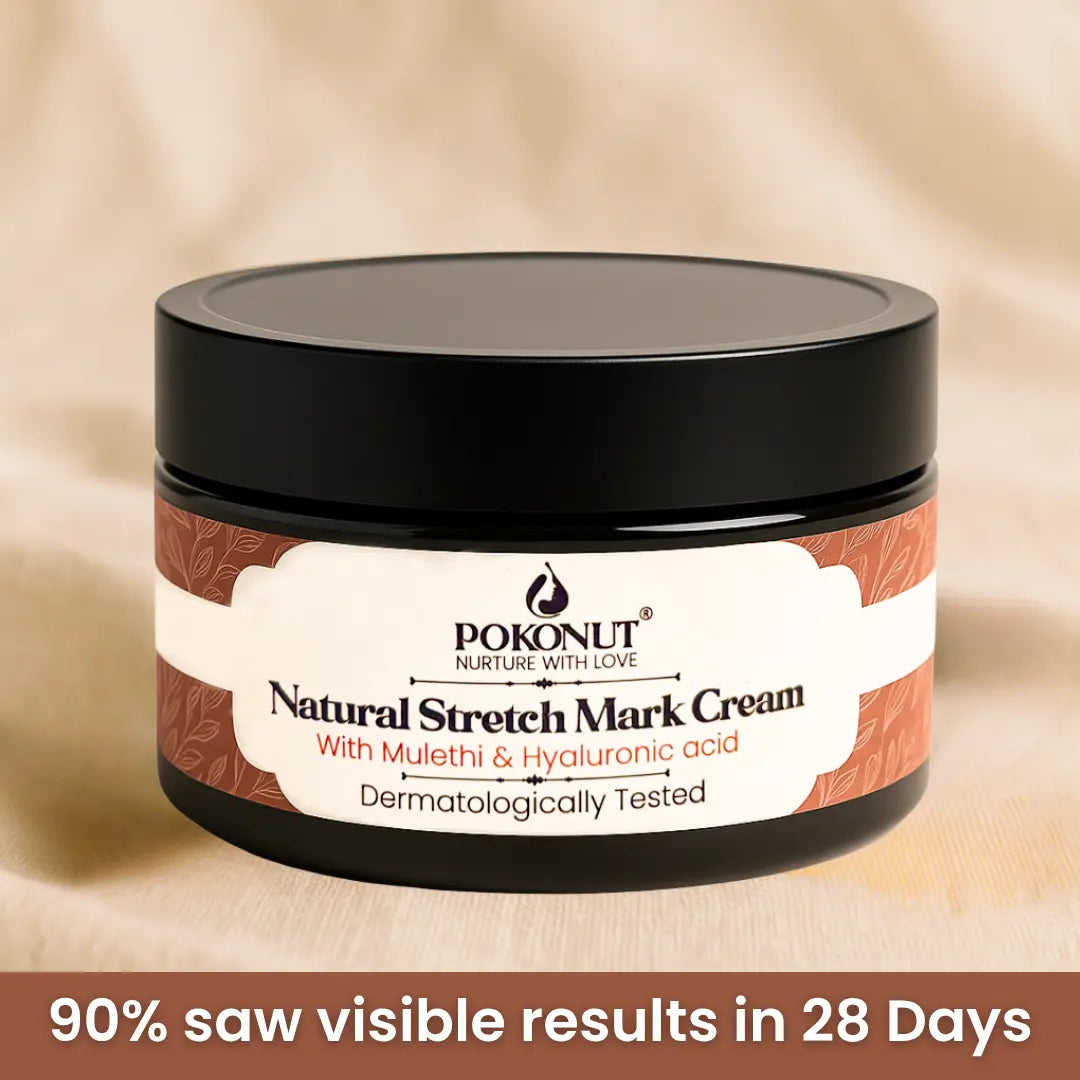
Pokonut Stretch Mark Cream
Stretch marks show up when skin stretches faster than it can rebuild during pregnancy, a growth spurt, a weight...
Shop Now →Can Peptides Remove Stretch Marks Completely?
No. Peptides cannot completely remove stretch marks because they cannot rebuild severely damaged collagen fibres to their original state. However, they can support the skin's natural repair process by improving collagen production, elasticity and hydration. This may help stretch marks appear softer, smoother and less noticeable over time.
For deeper or older stretch marks, treatments such as microneedling, laser therapy or dermatologist-guided procedures may provide greater improvement when appropriate.
Final Takeaway
Peptides are valuable ingredients for stretch mark care because they support collagen production, skin elasticity and repair rather than simply moisturizing the skin. Ingredients like copper peptides, Matrixyl and palmitoyl peptides may gradually improve the appearance of stretch marks when used consistently. While they cannot completely erase stretch marks, combining peptides with hydrating ingredients and a consistent skincare routine can help improve skin texture and overall appearance over time.
About Doctor :