






Is Stretch Mark Cream Safe While Breastfeeding?

Medically Reviewed By:
Dr. Neeraj Bansal, BAMS
Written by Our Editorial Team
Dr. Neeraj Bansal, BAMS
Written by Our Editorial Team
Medically Reviewed By:About the Reviewer
Most basic moisturising stretch mark creams are generally safe while breastfeeding, provided you use them on healthy, unbroken skin and prevent your baby from coming into contact with the product.
After delivery, you might notice stretch marks on your stomach, hips, thighs or breasts. You want to start using a cream, but you're unsure whether its ingredients could pass into your breast milk or affect your baby.
The answer depends on what the cream contains and where you apply it. A simple moisturiser is different from a medicated stretch mark treatment containing ingredients such as retinoids.
This guide explains how to choose a stretch mark cream while breastfeeding, which ingredients need caution, where you can apply it and what results you can realistically expect.
Key Takeaways
-
Most ordinary moisturising stretch mark creams are considered low risk during breastfeeding when used appropriately on intact skin.
-
Ingredients such as hyaluronic acid, glycerin and shea butter are commonly used for moisturising. The safety of the complete formula still matters.
-
Avoid applying ordinary cosmetic stretch mark cream to the nipple, areola or areas your baby's mouth may touch.
-
Topical retinoids such as tretinoin require individual medical guidance. Oral isotretinoin should not be used while breastfeeding.
-
Stretch mark creams can improve dryness and skin softness, but they cannot reliably remove stretch marks.
Can Stretch Mark Cream Ingredients Pass Into Breast Milk?
Most ingredients in an ordinary moisturising cream are unlikely to reach breast milk in significant amounts when applied to healthy skin. However, this depends on the ingredient, formulation and how the product is used.
Your skin acts as a protective barrier. When you apply cream, much of it remains on the surface or within the upper layers of the skin. Only some ingredients are absorbed into the bloodstream, and an ingredient would generally need to enter the bloodstream before it could pass into breast milk.
The Breastfeeding Network explains that most creams and ointments applied to the skin have very little absorption into breast milk and can be used without interrupting breastfeeding.
However, there are two different ways your baby could come into contact with a cream.
1. Through breast milk: This depends on how much of an ingredient enters your bloodstream and whether it passes into breast milk.
2. Through direct skin contact: Your baby could touch or swallow cream left on your nipple, breast or another area that comes into contact with their mouth.
For an ordinary moisturising stretch mark cream, preventing direct contact with product residue is an important practical precaution.
Absorption may also change when products are applied to damaged skin, large areas of the body or under tightly covered skin.
Medical reference: The Breastfeeding Network: Creams and Ointments Applied to the Skin and Breastfeeding.
Which Stretch Mark Cream Ingredients Are Generally Suitable While Breastfeeding?
If you're choosing a stretch mark cream while breastfeeding, start with the ingredients rather than the product's marketing claims.
A simple moisturising formula is usually a practical choice because it can help reduce dryness and improve skin comfort without relying on strong medicinal ingredients.
|
Ingredient |
What it does |
Breastfeeding consideration |
|
Hyaluronic acid |
Helps skin retain moisture and feel hydrated |
Generally low concern in ordinary topical moisturisers |
|
Shea butter |
Softens dry skin and reduces moisture loss |
Commonly suitable for use on intact skin |
|
Glycerin |
Attracts water and helps maintain hydration |
Generally suitable in moisturising formulations |
|
Cocoa butter |
Acts as an emollient and softens skin |
Generally low concern with normal topical use |
|
Coconut oil |
Helps reduce moisture loss and dryness |
Usually suitable on intact skin; avoid infant contact with residue |
|
Centella asiatica |
Used in soothing and skin care formulations |
Direct breastfeeding safety research is limited; assess the full product |
These ingredients serve different purposes, but most of their everyday benefits come from supporting skin hydration and comfort.
For example, hyaluronic acid attracts water, while shea butter helps reduce moisture loss. Used together in a moisturiser, such ingredients can make dry, stretched skin feel softer.
However, an ingredient being suitable for moisturising does not mean it has been clinically proven to remove stretch marks.
Similarly, botanical ingredients are not automatically safer than synthetic ingredients. Plant extracts and oils can also cause irritation or allergic reactions.
A useful rule: Choose a cream with a clearly disclosed ingredient list, avoid unfamiliar medicated actives without professional advice and patch test new products before applying them over larger areas.
Which Stretch Mark Cream Ingredients Need Extra Caution During Breastfeeding?
The ingredients that need the most attention are usually found in medicated creams, strong exfoliating treatments or products marketed for intensive skin renewal.
Can You Use Retinol or Tretinoin While Breastfeeding?
Retinol and tretinoin belong to a group of vitamin A derivatives called retinoids.
They are used in skincare because certain retinoids can encourage skin cell turnover and collagen remodelling. Prescription tretinoin has shown some benefit for early stretch marks.
However, advice about retinoids during breastfeeding is more nuanced than simply calling every retinoid unsafe.
According to the US National Library of Medicine's LactMed database, topical tretinoin is considered low risk to a nursing infant because very little is absorbed through the skin.
LactMed also states that topical tretinoin has not been directly studied during breastfeeding. It advises avoiding application to the nipple and areola and preventing the baby from touching treated skin.
Topical adapalene is also considered probably low risk because absorption is poor, but direct breastfeeding studies are lacking.
Tazarotene requires greater caution. LactMed reports differing expert recommendations, including advice to avoid its use while breastfeeding.
For someone treating cosmetic stretch marks rather than a medical skin condition, it is reasonable to start with a basic moisturiser and discuss any retinoid treatment with a dermatologist first.
Do not apply retinoids to areas that may come into contact with your baby's mouth or skin.
Medical references: NIH LactMed: Tretinoin and NIH LactMed: Tazarotene.
What About Strong Exfoliating Acids and Skin-Lightening Creams?
Not every exfoliating ingredient is prohibited during breastfeeding. The safety of a product depends on the specific ingredient, concentration, application area and amount absorbed.
However, strong chemical peels and high-concentration treatments should be discussed with a qualified professional.
Hydroquinone, sometimes found in pigmentation treatments, has limited breastfeeding safety data. LactMed notes that some experts recommend avoiding long-term use during nursing.
Also be cautious with creams that do not disclose their complete ingredients, particularly products promising rapid stretch mark removal or skin lightening.
Oral isotretinoin is different from topical skincare. Because adequate breastfeeding safety data are unavailable, it should not be used during breastfeeding.
If you're already using a prescription skin treatment, speak with your prescribing clinician before changing it.
Where Can You Apply Stretch Mark Cream While Breastfeeding?
You can generally apply a suitable moisturising stretch mark cream to healthy skin on your stomach, hips, thighs and other areas that do not come into contact with your baby's mouth.
The main concern is avoiding direct exposure to product residue, especially around the breasts during feeding.
|
Body area |
Can you apply stretch mark cream? |
|
Stomach |
Generally yes, on healthy, intact skin |
|
Hips and thighs |
Generally yes, with normal moisturising products |
|
Upper arms |
Usually yes, provided the baby does not lick or frequently contact treated skin |
|
Breasts, away from the feeding area |
Use caution and prevent contact with the baby's mouth or skin |
|
Nipple and areola |
Avoid ordinary cosmetic stretch mark creams |
|
Healing C-section incision |
Do not apply until fully healed and medically cleared |
Can You Apply Stretch Mark Cream on Your Breasts While Breastfeeding?
Stretch marks on the breasts are common because breast size changes during pregnancy and milk production.
If you have stretch marks on your breasts, you may want to moisturise them. However, the nipple and areola should be kept free from ordinary cosmetic stretch mark creams.
Products used on surrounding breast skin should also be kept away from areas your baby's mouth or face may touch during feeding.
If you're unsure whether your baby could come into contact with the treated area, it is better to avoid applying the product there.
A stretch mark cream is not the same as a nipple cream specifically formulated for breastfeeding.
Nipple products have different instructions, and some may be suitable for use around feeds. Always follow the directions for the specific product.
What if You Accidentally Applied Cream Before Feeding?
If you've applied an ordinary stretch mark cream near your nipple or areola, gently remove the residue before breastfeeding.
You can use water and a soft cloth if needed. Avoid aggressive rubbing, repeated scrubbing or harsh soap, as these may irritate the skin.
If your baby has swallowed a medicated cream or a product containing potentially harmful ingredients, contact your paediatrician or a poison information service for advice. Keep the packaging available so the ingredients can be checked.
For cream applied to your stomach, hips or thighs, you generally do not need to wash the product off before feeding, provided your baby's skin and mouth will not contact the treated area.
How Should You Use Stretch Mark Cream During Breastfeeding?
A gentle routine is usually enough. You don't need to apply several products or massage your skin aggressively to care for postpartum stretch marks.
-
Check the ingredients first. Look for a clearly labelled moisturising formula. Ask your doctor about prescription actives or ingredients you're unsure about.
-
Patch test the cream. Apply a small amount to healthy skin and watch for irritation before using it more widely.
-
Apply to clean, intact skin. Focus on stretch marks on your stomach, hips, thighs or other suitable areas.
-
Massage gently. Spread the cream using light circular movements. Avoid rubbing painful, inflamed or healing skin.
-
Follow the product instructions. Some moisturisers are used once or twice daily, but applying more than recommended will not necessarily improve results.
-
Wash your hands after application. This helps prevent transferring residue to your baby's skin or mouth.
If you have recently delivered by C-section, keep the product away from your healing incision.
The skin surrounding a C-section wound and the surgical incision itself need different care.
You can learn when to begin moisturising surrounding skin in our guide on using stretch mark cream after a C-section.
What Does Research Say About Stretch Marks and Creams? Two Important Statistics
Stretch mark creams are widely marketed to pregnant and breastfeeding mothers, but scientific evidence about their effectiveness is more limited than many product advertisements suggest.
Two major medical sources help explain how common stretch marks are and what research has found about creams.
1. Around 8 in 10 Pregnant Women Develop Stretch Marks
According to the UK's National Health Service (NHS), stretch marks affect approximately 8 out of 10 pregnant women.
They commonly appear on the stomach, breasts and thighs, although their location and appearance vary.
Stretch marks develop when changes in the deeper skin affect its collagen and elastin structure. Hormonal changes, genetics and how quickly the body stretches can all influence their development.
After delivery, stretch marks usually become lighter and less noticeable over time. However, they rarely disappear completely.
The NHS also explains that stretch marks are not harmful and generally do not cause medical problems.
What this means for you: Stretch marks are extremely common during pregnancy. You can moisturise the affected skin for comfort, but you do not medically need to remove them.
Source: NHS: Stretch Marks in Pregnancy.
2. A Review of 6 Clinical Trials Found No High-Quality Evidence That Creams Prevent Stretch Marks
A Cochrane systematic review examined six clinical trials involving 800 pregnant women to evaluate whether topical preparations could prevent pregnancy stretch marks.
A systematic review combines findings from multiple studies to assess the available evidence.
The researchers compared creams, lotions and other topical preparations with placebos, no treatment or alternative preparations.
Their findings did not demonstrate a clear preventive benefit, and they concluded that high-quality evidence supporting topical preparations for stretch mark prevention was lacking.
|
Research finding |
What it tells us |
|
6 trials involving 800 women |
Multiple topical preparations were assessed |
|
No clear preventive benefit |
Creams were not reliably shown to stop stretch marks developing |
|
No clear improvement in severity across the limited studies measuring it |
Evidence for reducing severity was insufficient |
|
More rigorous research needed |
Strong product claims require better clinical evidence |
What this means for you: Moisturising remains useful for dry, uncomfortable skin. However, preventing or removing stretch marks is a different claim that requires stronger evidence.
Importantly, this review studied stretch mark prevention during pregnancy. It did not measure whether ingredients transfer into breast milk or establish breastfeeding safety.
Source: Cochrane Review: Topical Preparations for Preventing Stretch Marks in Pregnancy (Brennan, Young and Devane, 2022).
What Do These Findings Mean for Breastfeeding Mothers?
The research highlights two separate questions that should not be confused.
Is a cream suitable to use while breastfeeding? This depends on its ingredients, absorption, application area and the possibility of infant contact.
Will the cream remove stretch marks? That depends on the type of treatment and the available clinical evidence. Ordinary moisturisers are not proven to remove mature stretch marks.
A cream may be appropriate for daily skin care without being an effective treatment for deeper stretch mark tissue.
Do Stretch Mark Creams Actually Work After Delivery?
Stretch mark creams can improve skin hydration and comfort after delivery, but ordinary moisturising products cannot reliably remove existing stretch marks.
Stretch marks form in the dermis, which is the middle layer of the skin. When its supporting collagen and elastin structures change, visible streaks develop.
Moisturising creams primarily help the skin retain water and reduce surface dryness. This can make the affected skin feel smoother and appear temporarily softer.
However, improving hydration is different from rebuilding deeper scar tissue.
Do New Red Stretch Marks Respond Better Than Old White Marks?
Newer stretch marks often appear red, pink, purple or brown, depending on your skin tone. Over time, they generally become paler and may look white or silver.
These stages matter because newer stretch marks may respond better to certain treatments.
The American Academy of Dermatology reports evidence that some hyaluronic acid preparations and prescription tretinoin can make early stretch marks less noticeable.
However, these findings do not mean every moisturiser containing hyaluronic acid will produce the same results.
Older white stretch marks are usually more difficult to improve with topical products.
A basic moisturiser can still help with dryness and skin softness, even when the marks themselves do not change significantly.
For more information on realistic treatment options, read our guide on how to fade stretch marks after pregnancy.
Medical reference: American Academy of Dermatology: Stretch Marks and Treatment Options.
How Do You Choose a Stretch Mark Cream While Breastfeeding?
Choosing the right cream is less about finding the longest ingredient list and more about selecting a product that meets your skin's needs without unnecessary exposure risks.
Before purchasing a cream, check these points:
-
Complete ingredient disclosure: The brand should clearly list what the product contains.
-
Suitable moisturising ingredients: Hyaluronic acid, glycerin and shea butter are useful for maintaining skin hydration.
-
Medicinal actives: Check whether the product contains retinoids, hydroquinone or other ingredients requiring professional advice.
-
Skin sensitivity: Prefer a gentle formula, especially if your skin is dry or easily irritated.
-
Application instructions: The product should explain where and how to apply it.
-
Realistic claims: Be cautious of products promising permanent stretch mark removal within a few days.
A label saying "natural" or "pregnancy safe" is not sufficient on its own to establish breastfeeding safety.
If you have a history of skin allergies, are nursing a premature infant or are unsure about a particular ingredient, seek individual medical guidance.
Where Does Pokonut Stretch Mark Cream Fit In?
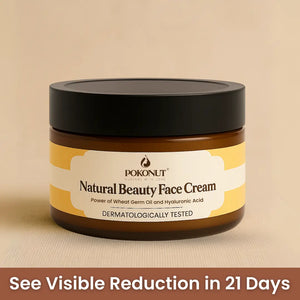
Pokonut Natural Stretch Mark Cream is a moisturising formulation designed to care for skin affected by stretching during pregnancy, postpartum changes and weight fluctuations.
Its disclosed formulation includes hyaluronic acid, glycerin, shea butter, coconut oil, rosehip seed oil and botanical extracts such as mulethi.
Hyaluronic acid and glycerin help attract and retain moisture, while shea butter and coconut oil help reduce moisture loss and improve skin softness.
The currently disclosed formula does not list retinoids or artificial fragrance. However, it contains botanical ingredients, including rose water, so it should not be assumed to be free from all potentially irritating or fragrant components.
For breastfeeding mothers, Pokonut may be considered as part of a moisturising routine on healthy, intact skin after reviewing the ingredients with a healthcare professional.
It should not be applied to the nipple, areola, areas the baby may lick or an unhealed surgical wound.
Its role is to support skin hydration and comfort. It should not be presented as a treatment proven to prevent breast milk exposure or permanently remove stretch marks.
When Should You Ask a Doctor Before Using Stretch Mark Cream?
Most healthy mothers can use an appropriate basic moisturiser without needing a special treatment plan. However, some situations deserve medical advice.
Consult your doctor or dermatologist if:
-
Your cream contains prescription retinoids or other unfamiliar medicinal ingredients.
-
You have broken skin, a rash, persistent redness or signs of infection.
-
Your C-section incision is still healing.
-
You experience burning, swelling or an allergic reaction after applying a product.
-
You have painful, cracked or bleeding nipples.
-
You are uncertain whether a prescribed treatment is compatible with breastfeeding.
If you develop breast pain, redness, fever or other symptoms suggesting a breast infection, seek medical advice rather than treating the area with ordinary cosmetic cream.
A stretch mark cream is not designed to treat nipple injuries, mastitis or surgical wounds.
The Bottom Line
Using a stretch mark cream while breastfeeding is generally low risk when you choose an appropriate moisturising formula and apply it correctly.
Ingredients such as hyaluronic acid, glycerin and shea butter can help keep postpartum skin hydrated and comfortable. However, the complete formulation matters, especially if it contains medicinal actives.
Avoid applying ordinary cosmetic creams to the nipple and areola, and prevent your baby from contacting treated skin.
Remember that moisturising can improve skin comfort, but stretch marks naturally change over time and no ordinary cream can guarantee their removal.
Choose a product with clear ingredients, follow safe application practices and seek medical advice when you're unsure about an active ingredient.
About Doctor :