






Does Salicylic Acid Remove Dark Spots? (and What Actually Works)
No, salicylic acid does not remove dark spots on its own, but it does help with some of them. It works best on dark spots left behind by acne. It unclogs pores and calms inflammation, so new marks stop forming, and it loosens the dead, pigmented top layer of skin so existing marks fade a little faster. It does very little for melasma, deep pigmentation or dark circles.
To fade the spots you already have, pair salicylic acid with a pigment-fading ingredient such as kojic acid, niacinamide, azelaic acid or vitamin C, and wear sunscreen every day. The strongest evidence for salicylic acid fading dark spots comes from 20–30% peels done by a dermatologist, not the 0.5–2% found in a typical face wash.
That's also why the American Academy of Dermatology's list of ingredients for fading dark spots in darker skin tones (azelaic acid, glycolic acid, kojic acid, retinoids and vitamin C) doesn't include salicylic acid. (AAD) Below, we cover which spots it helps, how long it takes, and how to use it in your routine.
First, what kind of dark spot do you have?
"Dark spot" covers several different problems, and salicylic acid behaves differently on each one. Not sure which one you have? Start with the difference between acne marks and dark spots, then the difference between pigmentation and dark spots.
|
Type of spot |
What it looks like |
Does salicylic acid help? |
|---|---|---|
|
Post-acne marks (PIH) |
Flat brown spots where pimples used to be |
Yes, partly. It stops new breakouts (so no new marks) and gently speeds up fading |
|
Red post-acne marks |
Pink or red flat marks after a pimple |
Some help. Dermatology reviews list post-acne redness among the uses of salicylic acid peels |
|
Sun spots, freckles |
Small, light-to-mid brown spots on sun-exposed areas |
Modest help, mainly as a clinic peel |
|
Melasma |
Larger symmetrical patches on cheeks, forehead, upper lip |
Only as an add-on to a proper melasma treatment from a dermatologist |
|
Deep pigmentation |
Slate-grey or blue-grey, or brown much darker than your skin |
No. It sits too deep for an exfoliant to reach |
|
Dark circles |
Shadowing under the eyes |
No |
|
Acne scars (pits, dents) |
Textured, not just discoloured |
No. That's a scar, not pigment |
How salicylic acid actually works on your skin
Salicylic acid is a beta hydroxy acid (BHA). Two things make it different from other acids:
-
It dissolves in oil. That lets it travel into oily pores, which is why it's so good for blackheads and breakouts.
-
It loosens the "glue" between skin cells rather than burning through them. Dermatologists call this a desmolytic action. The result is that the top layer of dead, pigmented cells sheds more easily. (Arif, 2015)
The same review notes that salicylic acid also has an anti-inflammatory effect. That matters, because inflammation is what triggers post-acne pigmentation in the first place. Less inflammation means fewer new spots.
So think of salicylic acid as a preventer and a helper: it reduces the breakouts that cause marks, calms inflammation, and helps the top layer turn over. What it doesn't do is switch off melanin production. That's the job of ingredients like kojic acid, niacinamide, azelaic acid and vitamin C.
The part most blogs get wrong: your face wash is not the peel in the studies
When you read "studies show salicylic acid fades hyperpigmentation", those studies almost always used 20–30% salicylic acid peels done in a clinic. A face wash or serum you buy online usually contains 0.5–2%, and a face wash stays on your skin for under a minute.
Here's what the research actually found:
-
In people with skin of colour: a randomised, double-blind, split-face trial of 36 people (about 95% with Fitzpatrick skin types IV–V, which covers most Indian skin tones) compared a 30% salicylic acid peel with Jessner's peel. Patients had three sessions, two weeks apart. Both peels were equally effective at reducing acne and post-acne hyperpigmentation. (How et al., 2020, International Journal of Dermatology)
-
In darker skin types V–VI: a pilot study of 25 patients used five 20–30% salicylic acid peels at two-week intervals and found them safe and effective for acne, post-inflammatory hyperpigmentation and melasma. (Grimes, 1999)
-
Typical clinic schedule: peels repeated every 2–4 weeks, with the best results after about 3–6 sessions. (Arif, 2015)
What this means for you: the evidence for salicylic acid fading dark spots is real, but it's evidence for professional peels. Your daily face wash will help mostly by preventing new marks. If your spots are stubborn, a series of salicylic peels with a dermatologist is the version that has been tested.
Why salicylic acid is a good fit for Indian skin
Medium and dark skin tones make extra melanin very easily, so almost every pimple, bite, scratch or rash can leave a mark behind. The AAD notes that dark spots are one of the most common reasons people with darker skin see a dermatologist. (AAD)
That's exactly why harsh treatments can backfire on brown skin: irritation itself creates new dark spots. Salicylic acid peels have a good safety record here. The 2015 review describes them as safe across skin types I–VI, and in the darker-skin study the side effects (mild crusting, dryness, temporary darkening) cleared within one to two weeks. (Arif, 2015)
The catch: "well tolerated" doesn't mean "use as much as you like." Over-exfoliating is one of the most common reasons a routine stops working, which brings us to the next point.
How long does it take?
Be realistic here, because most frustration with dark spot products comes from expecting results in a week.
-
Once the cause stops (your acne is under control), a spot a few shades darker than your skin usually fades on its own in about 6 to 12 months. (AAD)
-
Deeper pigment (slate-grey or very dark brown) can take years.
-
The right treatment speeds this up. A good routine with a pigment-fading ingredient often shows visible change in 4–12 weeks; clinic peels need 3–6 sessions.
If you're still seeing new marks every month, the problem isn't the fading product. It's that the acne hasn't been controlled yet. For a realistic timeline, see how long does it take for acne scars to fade.

Dark Patch Reducer Cream
Introducing our Dark Patch Reducer Cream, a powerhouse blend of natural ingredients formulated to effectively reduce ...
Shop Now →A simple routine that uses salicylic acid the right way
Morning
-
Salicylic acid cleanser (0.5–2%), only if you're acne-prone or oily. Dry or sensitive skin can use it 3–4 times a week instead.
-
A dark spot treatment with a melanin-targeting active. Pokonut's dark spot removal cream combines 1% kojic acid with 10% niacinamide, plus hyaluronic acid and aloe vera to keep skin comfortable.
-
Sunscreen, every single day. The AAD recommends a broad-spectrum, SPF 30+ sunscreen with iron oxide (tinted formulas), because iron oxide also blocks visible light, which can darken spots in brown skin. Check the inactive ingredients for "iron oxide".
Night
-
Gentle cleanser.
-
Your dark spot cream again, or a salicylic serum on alternate nights (not both on the first week, build up slowly).
-
Moisturiser.
Wondering can we use salicylic acid and niacinamide together? Yes, and it's a popular combination for oily, spot-prone skin.
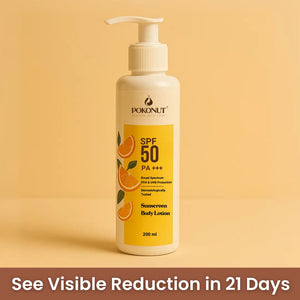
For body spots (back acne marks, knees, elbows, inner thighs): a dark patches removal cream handles the fading step, and a sunscreen body lotion SPF 50 protects the areas your face sunscreen doesn't reach. For underarms, a dark underarms roll on with 6% AHA and BHA works on both rough texture and discolouration.
Salicylic acid vs other dark spot ingredients
|
Ingredient |
What it does for dark spots |
Best for |
|---|---|---|
|
Salicylic acid |
Unclogs pores, calms inflammation, loosens dead pigmented cells |
Acne-prone skin; preventing new marks |
|
Kojic acid |
Slows down melanin production |
Fading existing brown spots |
|
Niacinamide |
Reduces pigment transfer to the surface; supports the skin barrier |
Most skin types, including sensitive |
|
Glycolic acid |
Water-soluble exfoliant, works on the surface |
Dull, uneven tone on non-sensitive skin |
|
Vitamin C |
Antioxidant, brightens over time |
Sun-related spots, dullness |
For a head-to-head, read our kojic acid vs salicylic acid comparison. Worried about irritation on darker skin? We answer can kojic acid cause hyperpigmentation separately.
5 mistakes that make dark spots worse
-
Over-exfoliating. Salicylic face wash + glycolic toner + scrub + peel = irritation. And irritation in brown skin makes new dark spots. The AAD advises stopping any product that burns or stings.
-
Skipping sunscreen. Exfoliated skin is more sun-sensitive, and UV and visible light both deepen pigment.
-
Picking or squeezing pimples. Every injury is a new mark waiting to happen.
-
Switching products every two weeks. Fading takes months. Give a routine at least 8–12 weeks.
-
Treating only the spots, not the acne. If breakouts continue, marks keep appearing.
Been using a product for weeks with no change? Read why your dark spot remover cream isn't working.
Who should be careful with salicylic acid
-
Pregnant women: salicylic acid is chemically related to aspirin, and medical reviews advise against salicylic acid peels during pregnancy. (Arif, 2015) Ask your doctor before using any salicylic product. Also read: is kojic acid safe during pregnancy.
-
People on retinoids planning a peel: dermatologists usually pause retinoids 1–2 weeks before a salicylic peel in darker skin types, to lower the risk of post-peel darkening.
-
Aspirin allergy: avoid salicylic acid altogether.
-
Very dry or eczema-prone skin: start at 2–3 times a week and moisturise well.
See a dermatologist if a spot is growing, changing colour or shape, bleeding, or looks slate-grey or blue. Those need a professional look, not a cleanser.
The bottom line
Does salicylic acid remove dark spots? On its own, not really, at least not at the strengths you'll find in a face wash. What it does very well is stop acne from creating new marks and help your skin shed the pigmented top layer faster. Clinic-strength salicylic peels have solid evidence for fading post-acne pigmentation, including in brown skin.
For most people, the winning formula is simple: salicylic acid to control breakouts + a pigment-fading cream + iron-oxide sunscreen every day + patience. If breakouts are still your main problem and you'd prefer a gentle, acid-free wash, Pokonut's neem and tulsi anti acne soap is an easy first step.