









Does Vitamin E Really Get Rid of Stretch Marks?
- 1 What Are Stretch Marks?
- 2 Does Vitamin E Help Get Rid of Stretch Marks?
- 3 Why Vitamin E Alone Is Not Enough for Stretch Marks
- 4 Can Vitamin E Fade Stretch Marks Slightly?
- 5 New Stretch Marks vs Old Stretch Marks: Does Vitamin E Work Differently?
- 5.1 New Stretch Marks
- 5.2 Old Stretch Marks
- 6 What Works Better Than Vitamin E for Stretch Marks?
- 7 A Well-Formulated Stretch Mark Cream
- 8 Pokonut Natural Stretch Mark Cream as a Daily Care Solution
- 9 Why Pokonut Natural Stretch Mark Cream Is Better Than Vitamin E Alone
- 10 How to Use Pokonut Natural Stretch Mark Cream for Best Results
- 11 Other Ingredients and Treatments That May Help Stretch Marks
- 11.1 Hyaluronic Acid
- 11.2 Centella Asiatica
- 11.3 Retinoids
- 11.4 Dermatology Treatments
- 12 Can Vitamin E Prevent Stretch Marks?

Medically Reviewed By:
Dr. Mousumi Dash, BAMS
Written by Our Editorial Team
Dr. Mousumi Dash, BAMS
Written by Our Editorial Team
Medically Reviewed By:About the Reviewer
Vitamin E is one of the most commonly searched ingredients for stretch marks. Many people apply Vitamin E oil, capsules, or creams hoping their stretch marks will completely disappear. But the truth is simple: Vitamin E does not completely remove stretch marks.
Stretch marks form deeper inside the skin when the skin stretches faster than it can adjust. This affects collagen and elastin, the two important proteins that keep the skin firm, flexible, and smooth. Vitamin E can help support skin moisturisation and softness, but it cannot fully repair the deeper skin changes that cause stretch marks.
So, if you are asking, “Does Vitamin E really get rid of stretch marks?” the answer is no, not completely. However, it may help the skin feel softer and look slightly smoother when used regularly.
What Are Stretch Marks?
Stretch marks are also called striae or striae distensae. They are lines that appear on the skin when the skin stretches quickly. This can happen during pregnancy, puberty, sudden weight gain, sudden weight loss, or fast muscle growth.
According to NCBI, stretch marks are linear dermal scars that develop due to rapid skin stretching and changes in the skin’s connective tissue.
Stretch marks commonly appear on the stomach, thighs, hips, breasts, arms, lower back, and buttocks. In the beginning, they may look red, pink, purple, or brown depending on your skin tone. Over time, they may become white, silver, or lighter than the surrounding skin.
Stretch marks are very common and usually harmless. They are not a sign that something is wrong with your body. But many people want to reduce their appearance because they affect how the skin looks and feels.
Does Vitamin E Help Get Rid of Stretch Marks?
No, Vitamin E does not really get rid of stretch marks completely.
Vitamin E is an antioxidant. This means it helps protect the skin from oxidative stress caused by free radicals. It is also commonly used in skincare because it can support moisturisation and help the skin feel soft.
But stretch marks are not just dry marks on the surface of the skin. They form in the deeper layer of the skin where collagen and elastin fibres are affected. Since Vitamin E mostly supports the upper layers of the skin, it cannot fully remove stretch marks from the deeper skin structure.
Vitamin E may help with:
-
Dryness around stretch marks
-
Rough skin texture
-
Mild skin tightness
-
Skin softness
-
Skin nourishment
But it cannot fully erase stretch marks.
Why Vitamin E Alone Is Not Enough for Stretch Marks
To understand why Vitamin E alone is not enough, you need to understand how stretch marks form.
Your skin has collagen and elastin fibres. Collagen gives the skin strength, while elastin helps the skin stretch and return to its normal shape. When the body changes quickly, the skin may stretch too fast. This can weaken or damage the collagen-elastin network.
That is why stretch marks appear as long lines on the skin.
Vitamin E can help support the skin barrier and improve surface-level dryness, but it cannot rebuild the deeper collagen and elastin structure on its own. This is why applying only Vitamin E oil may make the skin feel better, but it may not give strong visible fading.
In simple words, Vitamin E is a support ingredient, not a complete stretch mark solution.
Can Vitamin E Fade Stretch Marks Slightly?
Vitamin E may help stretch marks look slightly better in some cases, especially when the skin is dry, rough, or tight. When the skin is well moisturised, stretch marks may look less harsh and the surrounding skin may feel smoother.
But this does not mean Vitamin E is removing the stretch marks.
The visible improvement depends on many factors, such as:
-
How old the stretch marks are
-
Whether they are red, purple, brown, white, or silver
-
Your skin type
-
Your skin elasticity
-
Your genetics
-
Hormonal changes
-
Pregnancy or weight changes
-
How consistently you care for the skin
Fresh stretch marks usually respond better to skincare than old stretch marks. Older white or silver stretch marks are more settled and harder to fade with topical products.
New Stretch Marks vs Old Stretch Marks: Does Vitamin E Work Differently?
New Stretch Marks
New stretch marks usually look red, pink, purple, or brown. They may also feel slightly itchy, tight, or raised. These stretch marks are in the early stage, so skincare may support them better.
Vitamin E may help new stretch marks by keeping the skin soft and reducing dryness. It may also make the area feel more comfortable when the skin feels tight.
But even for new stretch marks, Vitamin E alone is not the best solution. The skin needs more complete care that supports hydration, elasticity, nourishment, and barrier strength.
Old Stretch Marks
Old stretch marks usually look white, silver, or lighter than your skin tone. They are often flatter and more settled into the skin.
Vitamin E may make old stretch marks feel softer, but it usually cannot fade them deeply. Old stretch marks are harder to treat because the skin structure has already changed over time.
For old stretch marks, regular moisturisation can improve skin texture, but stronger visible improvement may need dermatologist-guided treatments like laser, microneedling, or radiofrequency.
What Works Better Than Vitamin E for Stretch Marks?
If you are looking for a better solution than plain Vitamin E oil, choose a product that supports the skin in more than one way. Stretch mark care is not only about applying one oil. The skin needs hydration, moisturisation, elasticity support, and nourishment.
This is where a well-formulated stretch mark cream can be more useful.
A Well-Formulated Stretch Mark Cream
A good stretch mark cream works better than Vitamin E alone because it combines multiple skin-supporting benefits in one formula. Instead of depending on only one ingredient, it supports the skin through daily hydration and nourishment.
A stretch mark cream may help:
- Keep the skin moisturised
- Reduce dryness and tightness
- Improve skin softness
- Support skin elasticity
- Improve skin comfort during body changes
- Make stretch marks look smoother with regular use
- Support the visible appearance of stretch mark-prone skin
This does not mean a cream can erase stretch marks overnight. But it can be a better daily care solution than using only Vitamin E oil.

Pokonut Stretch Mark Cream
Stretch marks show up when skin stretches faster than it can rebuild during pregnancy, a growth spurt, a weight...
Shop Now →Pokonut Natural Stretch Mark Cream as a Daily Care Solution
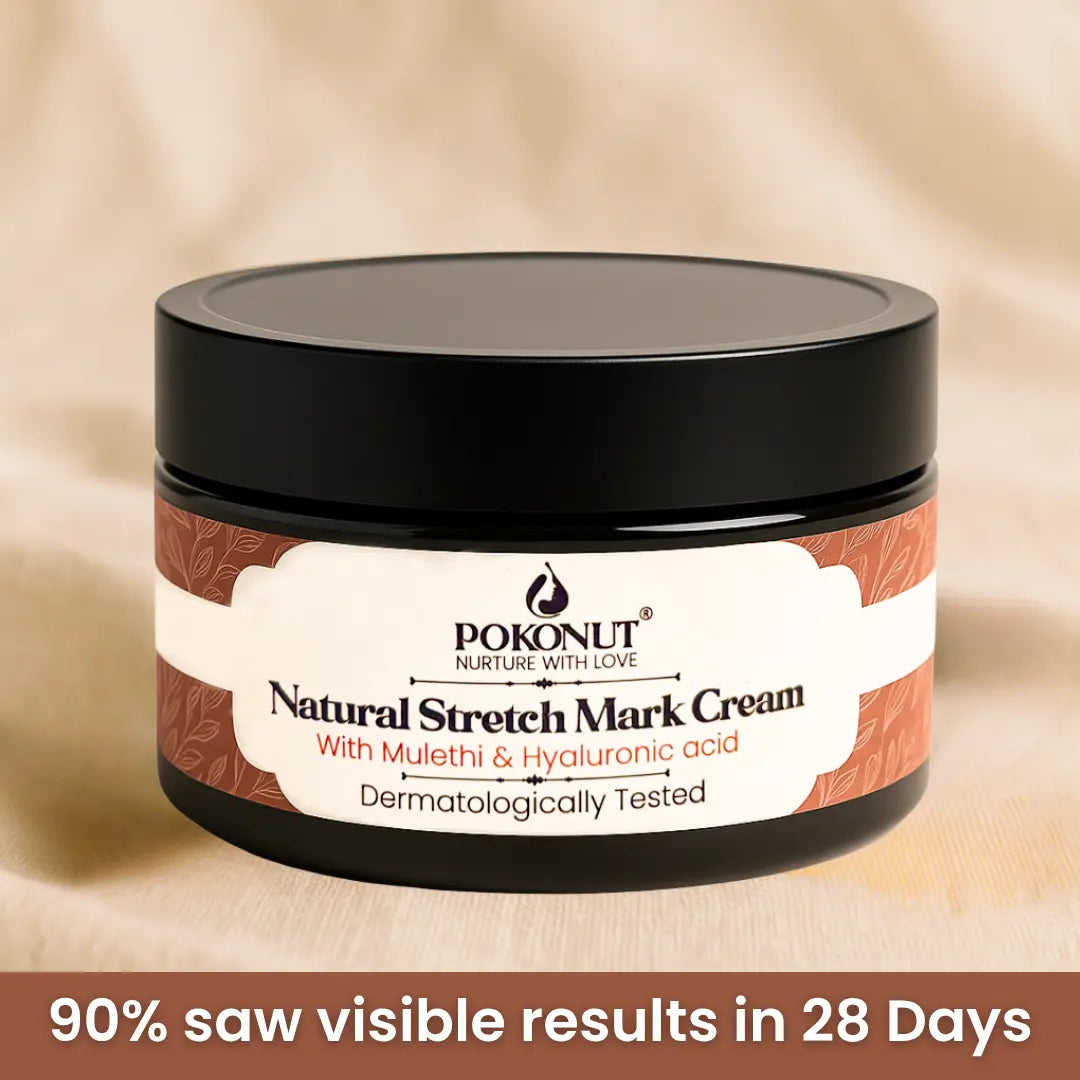
Pokonut Natural Stretch Mark Cream is a better daily care option than using only Vitamin E oil because it is made to support stretch mark-prone skin in a more complete way.
It helps moisturise the skin, improve skin softness, support elasticity, and reduce the dry, tight feeling that often comes with stretching skin. It can be used on common stretch mark-prone areas like the stomach, thighs, hips, arms, and breasts.
With regular use and gentle massage, Pokonut Natural Stretch Mark Cream may help improve the visible appearance of stretch marks and keep the skin nourished during body changes.
It is important to understand that Pokonut Natural Stretch Mark Cream does not claim to erase stretch marks overnight. Instead, it works as a daily skin support solution to make stretch mark-prone skin feel softer, smoother, and better moisturised.
Why Pokonut Natural Stretch Mark Cream Is Better Than Vitamin E Alone
Vitamin E oil mainly gives antioxidant and moisturising support. But stretch mark-prone skin usually needs more complete care. A cream made specifically for stretch marks can support the skin better because it is easier to apply daily and can target multiple concerns at once.
|
Factor |
Vitamin E Oil Alone |
Pokonut Natural Stretch Mark Cream |
|
Main role |
Antioxidant and moisturising support |
Daily care for stretch mark-prone skin |
|
Hydration support |
Limited |
Helps keep skin moisturised |
|
Skin elasticity |
Limited support |
Supports skin flexibility and comfort |
|
Texture |
Can feel sticky or heavy |
Cream texture is easier for daily use |
|
Best use |
Dryness and skin softness |
Stretch mark care and visible appearance support |
|
Result expectation |
Mild support only |
Better daily solution with consistent use |
Pokonut Natural Stretch Mark Cream is a practical option if you want a simple daily product instead of applying thick Vitamin E oil or breaking Vitamin E capsules on the skin.
How to Use Pokonut Natural Stretch Mark Cream for Best Results
Stretch mark care needs consistency. One-time application will not give visible results. The best way is to use the cream daily and massage it gently into the skin.
Here is how to use it:
-
Clean the area and pat the skin dry.
-
Take a small amount of Pokonut Natural Stretch Mark Cream.
-
Apply it on stretch mark-prone areas like the stomach, thighs, hips, arms, or breasts.
-
Massage gently in circular motions for 2 to 3 minutes. Use it daily for best results.
-
Continue for a few weeks because stretch mark care takes time.
-
Gentle massage can also help improve how the product spreads on the skin. Do not rub harshly because stretch mark-prone skin may already feel sensitive or tight.
If you are pregnant or breastfeeding, it is always better to check with your doctor before using any new skincare product.
Other Ingredients and Treatments That May Help Stretch Marks
Apart from Vitamin E, there are some ingredients and treatments that may support the appearance of stretch marks.
Hyaluronic Acid
Hyaluronic acid helps attract and hold water in the skin. It supports hydration and makes the skin look plumper and smoother. Hydrated skin usually looks healthier and feels more comfortable.
Centella Asiatica
Centella asiatica is commonly used in skincare for skin repair and elasticity support. It may help improve the look and feel of stretch mark-prone skin when used regularly in a good formula.
Retinoids
Retinoids may help early stretch marks by supporting collagen production. But they are not suitable for everyone. Pregnant and breastfeeding women should avoid retinoids unless a doctor clearly approves them.
Dermatology Treatments
For old or deep stretch marks, professional treatments may give stronger visible improvement. These include laser therapy, microneedling, radiofrequency, chemical peels, and microdermabrasion.
These treatments should only be done under professional guidance. Even with dermatology treatments, stretch marks may become less visible, but they may not disappear completely.
Can Vitamin E Prevent Stretch Marks?
Vitamin E alone cannot guarantee stretch mark prevention.
Stretch marks depend on many factors like genetics, hormones, pregnancy, skin elasticity, weight changes, and how fast the body changes. If your skin stretches quickly, stretch marks may still appear even if you use oil or cream.
But keeping the skin moisturised can help reduce dryness, tightness, and discomfort. This is why using a complete stretch mark cream can be more useful than relying only on Vitamin E oil.
A good prevention routine should focus on:
-
Daily moisturisation
-
Gentle massage
-
Healthy diet
-
Good hydration
-
Slow and healthy weight management
-
Pregnancy-safe skincare when needed
-
Early care when stretch marks first appear
About Doctor :