











Why Moisturising and Nourishing the Skin Is Essential for Managing Stretch Marks
- 1 What Are Stretch Marks and Why Do They Form?
- 2 How Does Skin Elasticity Affect Stretch Marks?
- 3 Why Moisturising the Skin Matters
- 4 How Skin Nourishment Supports Stretch Marks
- 4.1 Helps strengthen the skin barrier
- 4.2 Improves skin flexibility during stretching
- 4.3 Supports ongoing skin repair
- 4.4 Reduces dryness that highlights stretch marks
- 4.5 Encourages long-term consistency in care
- 5 Can Moisturising Prevent Stretch Marks?
- 6 Does Moisturising Help Fade Existing Stretch Marks?
- 7 When and How Often Should You Moisturise Stretch Mark-Prone Areas?
- 8 What to Look for in a Cream for Stretch Marks
- 9 Conclusion

Medically Reviewed By:
Dr. Mousumi Dash, BAMS
Written by Our Editorial Team
Dr. Mousumi Dash, BAMS
Written by Our Editorial Team
Medically Reviewed By:About the Reviewer
Stretch marks form when the skin is forced to stretch faster than its structural support system can handle. This process does not begin at the surface but deep within the skin, where collagen and elastin fibres are responsible for strength and flexibility. When these fibres are overstretched, they weaken and break, leading to visible lines on the skin.
Moisturising and nourishing the skin do not reverse this structural damage. However, they play a critical role in supporting skin elasticity, reducing discomfort, and improving how stretch marks look and feel over time. Understanding this role helps set realistic expectations and explains why consistent skin care matters in managing stretch marks.
What Are Stretch Marks and Why Do They Form?
Stretch marks are a result of mechanical stress on the skin. When the skin stretches rapidly, the dermal layer does not get enough time to adapt. This leads to microscopic tears in collagen and elastin fibres.
They commonly develop during pregnancy, puberty, sudden weight changes, or rapid muscle growth. Hormonal changes can further weaken skin structure, making it more prone to damage even under moderate stretching.
Because stretch marks originate in deeper layers of the skin, surface-level treatments alone cannot remove them.
| Also Read | Pokonut Stretch Mark Cream Review |
How Does Skin Elasticity Affect Stretch Marks?
Skin elasticity refers to the skin’s ability to stretch and return to its original shape without damage. This elasticity depends heavily on collagen integrity, elastin quality, and overall skin hydration.
When skin is well-moisturised and nourished, the outer barrier remains flexible, reducing surface tension during stretching. This does not prevent internal fibre damage completely, but it helps distribute mechanical stress more evenly across the skin.
Dry or undernourished skin is less adaptable. Increased stiffness raises resistance during stretching, which increases the likelihood of deeper tissue damage and more pronounced stretch marks. Supporting elasticity through hydration and nourishment helps the skin tolerate stretching with less visible impact.
Why Moisturising the Skin Matters
Moisturising improves the skin’s ability to hold water and maintain barrier function. This directly affects how flexible the skin feels during periods of expansion.
Moisturised skin experiences less tightness, itching, and surface irritation. These symptoms are common when the skin is stretching and under stress. By reducing surface dryness, moisturising allows the skin to stretch more comfortably and reduces secondary inflammation that can worsen the appearance of stretch marks.
While moisturising does not repair collagen tears, it improves daily skin function and comfort, which influences long-term appearance.
How Skin Nourishment Supports Stretch Marks
Skin nourishment focuses on strengthening the skin from the surface inward, which is essential when the skin is under constant stretching stress.
-
Helps strengthen the skin barrier
Nourishing ingredients support the lipid layer of the skin, which helps prevent excessive moisture loss. A stronger barrier keeps the skin resilient and less prone to dryness-related damage that can make stretch marks appear more pronounced.
-
Improves skin flexibility during stretching
Well-nourished skin remains softer and more adaptable. This flexibility allows the skin to stretch with less resistance, reducing surface tension that can worsen discomfort and visible texture changes.
-
Supports ongoing skin repair
Nourished skin maintains healthier cell function, which helps the skin recover more efficiently from daily stress. While this does not repair deep dermal tears, it improves overall skin quality over time.
-
Reduces dryness that highlights stretch marks
Dry skin increases contrast between stretch marks and surrounding areas. Proper nourishment smooths the skin surface, helping stretch marks blend more naturally with the rest of the skin.
-
Encourages long-term consistency in care
Nourished skin feels more comfortable and less irritated, making regular application easier to maintain during long phases such as pregnancy, weight changes, or postpartum recovery.
Can Moisturising Prevent Stretch Marks?
Moisturising cannot fully prevent stretch marks, especially when genetic or hormonal factors are involved. Stretch marks are a structural issue, not a surface problem.
However, moisturising can reduce the severity of stretch marks by keeping the skin more flexible and less reactive during stretching. When used early and consistently, moisturising supports better skin adaptation and reduces discomfort, which contributes to improved overall skin condition.

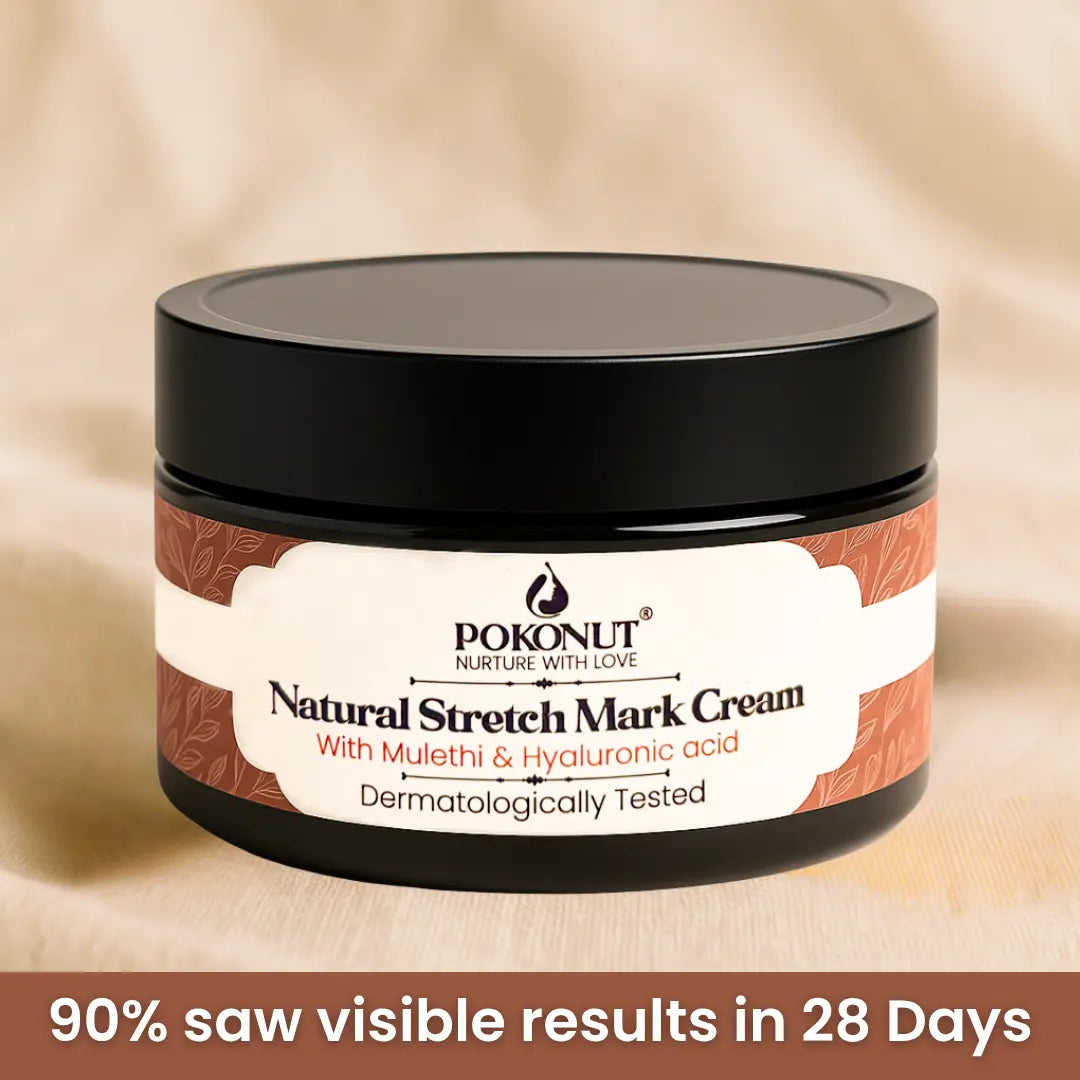
Pokonut Stretch Mark Cream
Transform your skin with POKONUT's Natural Stretch Mark Cream, a versatile solution for all types of Stretch Ma...
Shop Now →Does Moisturising Help Fade Existing Stretch Marks?
Moisturising does not remove existing stretch marks. Structural damage in the dermis cannot be reversed with topical care alone.
What moisturising does help with is surface texture and visual blending. By improving skin smoothness and reducing dryness, stretch marks often appear softer and less prominent over time. This gradual improvement depends heavily on regular use rather than product strength.
When and How Often Should You Moisturise Stretch Mark-Prone Areas?
Daily moisturising is most effective during periods of active skin stretching. Areas such as the abdomen, thighs, hips, breasts, and lower back benefit from consistent care.
Applying moisturiser after bathing helps lock in moisture while the skin is still slightly damp. Long-term consistency matters more than frequent product changes or heavy application.
What to Look for in a Cream for Stretch Marks
When choosing a cream for stretch marks, the goal should be ongoing skin support rather than quick results.
-
Strong hydration support - Helps maintain skin softness and reduces tightness during stretching.
-
Barrier-strengthening properties - Supports the skin’s ability to retain moisture and tolerate mechanical stress.
-
Nourishing components - Improves skin comfort and flexibility over time rather than targeting surface appearance alone.
-
Encourages consistent use - A formulation that absorbs well and feels comfortable is more likely to be used daily, which is essential for results.
For this reason, a well-formulated stretch mark cream is typically used as part of regular skin care to support the skin continuously, rather than as a treatment expected to deliver immediate visible change.
| Also Read | How to Use Pokonut's Stretch Mark Cream |
Conclusion
Stretch marks develop because the skin’s structural limits are exceeded. While they cannot be erased through topical care, moisturising and nourishing the skin remain essential for managing their appearance and maintaining skin comfort.
By supporting elasticity, reducing dryness, and improving skin resilience, consistent moisturising helps the skin cope better with change. With realistic expectations and regular care, this approach provides meaningful, science-backed support for stretch mark management.
About Doctor :