







Why Pokonut Is the Best Cream for Stretch Marks During Pregnancy?
- 1 Key Takeaways
- 2 Why Do Stretch Marks Happen During Pregnancy?
- 3 What Makes a Stretch Mark Cream Good During Pregnancy?
- 4 Why Pokonut Natural Stretch Mark Cream Stands Out
- 5 Benefits of Using Pokonut Stretch Mark Cream During Pregnancy
- 6 How to Use Pokonut Stretch Mark Cream for Best Results
- 7 When Should You Start Using Stretch Mark Cream During Pregnancy?
- 8 Can Pokonut Cream Prevent Stretch Marks Completely?
- 9 Final Thoughts

Medically Reviewed By:
Dr. Mousumi Dash, BAMS
Written by Our Editorial Team
Dr. Mousumi Dash, BAMS
Written by Our Editorial Team
Medically Reviewed By:About the Reviewer
Stretch marks during pregnancy are common because the skin stretches quickly as the belly, breasts, hips, and thighs grow. This stretching affects collagen and elastin, the support fibres that keep skin firm and flexible. A pregnancy stretch mark cream cannot fully stop stretch marks from forming because genetics, hormones, weight changes, and skin elasticity also play a role. But the right cream can support what stretching skin needs the most: deep moisturisation, softness, elasticity support, and comfort. Pokonut Natural Stretch Mark Cream is made for this daily pregnancy body care need, making it a strong choice for stretch mark-prone skin. This guide also explains what to look for on the label, which ingredients women commonly choose, and how to use a cream through pregnancy.
Disclaimer - Always check with your obstetrician before you start any new product.
Key Takeaways
-
Stretch marks are common during pregnancy and may not be fully preventable. They form when the skin stretches quickly and the collagen-elastin support is affected.
-
A good pregnancy stretch mark cream should moisturise, support elasticity, and reduce dryness. Pokonut Natural Stretch Mark Cream supports soft, nourished, and comfortable skin during body changes.
-
No cream can erase stretch marks overnight, so regular use and realistic expectations are important. Pregnant women should check with a doctor before using any new skincare product.
Why Do Stretch Marks Happen During Pregnancy?
Stretch marks happen when the skin stretches faster than it can adjust. During pregnancy, the belly grows, the breasts may increase in size, and the body may gain weight. This fast stretching can affect the middle layer of the skin, where collagen and elastin fibres are present.
Collagen gives skin strength. Elastin helps the skin stretch and return to shape. When these fibres are stretched too quickly, stretch marks may appear as red, pink, purple, brown, white, or silver lines.
MedlinePlus, a service of the U.S. National Library of Medicine, explains that stretch marks can appear when the skin is rapidly stretched, including during pregnancy. (medlineplus.gov)
Stretch marks commonly appear on the belly, breasts, thighs, hips, arms, and lower back. Hormonal changes during pregnancy can also make the skin more prone to stretch marks. Genetics matter too. If your mother or sister had pregnancy stretch marks, your chances may be higher.
Other factors like sudden weight gain, twin pregnancy, dry skin, low skin elasticity, rapid belly growth, and poor skin hydration may also increase the chances of stretch marks. This is why stretch marks are not caused by poor skincare alone. They are a natural skin response to pregnancy-related body changes.
What Makes a Stretch Mark Cream Good During Pregnancy?
A good stretch mark cream during pregnancy should not be harsh. Pregnancy skin can become dry, tight, itchy, and sensitive. The cream should support the skin barrier and keep the skin comfortable as the body changes.
A good pregnancy stretch mark cream should moisturise dry and stretching skin, support skin elasticity, reduce tightness, improve skin softness, feel comfortable for daily use, work well with gentle massage, and avoid unnecessary harsh ingredients.
The goal is not to remove stretch marks instantly. The goal is to keep stretch mark-prone skin nourished, flexible, and less dry during pregnancy. A cream is also easier to use daily than thick oils because it absorbs better, spreads evenly, and can be applied on larger areas like the belly, thighs, hips, and breasts.

Pokonut Stretch Mark Cream
Stretch marks show up when skin stretches faster than it can rebuild during pregnancy, a growth spurt, a weight...
Shop Now →Why Pokonut Natural Stretch Mark Cream Stands Out
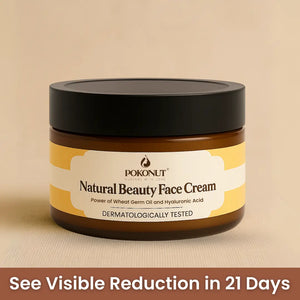
Pokonut Natural Stretch Mark Cream stands out because it is made for stretch mark-prone skin and supports the main needs of pregnancy skin: moisturisation, softness, elasticity, and comfort.
During pregnancy, the skin often feels stretched, dry, and tight. This happens because the belly and body are growing, and the skin barrier may need extra support. Pokonut Natural Stretch Mark Cream works as a daily care solution for this phase by keeping the skin moisturised and nourished.
It supports skin hydration, skin softness, skin elasticity, dryness care, tight skin comfort, smoother-looking skin, and daily massage-based body care. It can be used on common stretch mark-prone areas like the belly, thighs, hips, arms, and breasts.
With regular use, it helps keep the skin soft and comfortable while supporting the visible appearance of stretch marks. Pokonut Natural Stretch Mark Cream does not claim to erase stretch marks overnight. It works as a daily support cream for pregnancy skin that is stretching and changing.
Benefits of Using Pokonut Stretch Mark Cream During Pregnancy
Using Pokonut stretch marks removal cream during pregnancy is useful because it supports the skin in multiple ways instead of only giving temporary oiliness. Pregnancy skin needs consistent moisturisation, especially when the belly and body start stretching faster.
-
Helps moisturise stretching skin and reduce dryness.
-
Supports skin softness and smoothness.
-
Helps reduce the dry, tight feeling as the belly grows.
-
Supports skin elasticity during pregnancy-related body changes.
-
Keeps stretch mark-prone areas like the belly, thighs, hips, arms, and breasts nourished.
-
Works well with gentle massage-based application.
-
Helps improve the visible appearance of stretch marks over time with regular use.
Using it daily can help the skin feel more comfortable, especially in the second and third trimester when stretching becomes more noticeable. This makes Pokonut Natural Stretch Mark Cream a practical daily solution for pregnant women who want simple, gentle, and consistent stretch mark care.
How to Choose a Stretch Mark Cream in Pregnancy
Use this checklist when you compare creams:
Read the full ingredient list and show it to your obstetrician.
- Check that the cream does not contain retinoids. Retinoids are generally avoided in pregnancy.
- Look for hydrating ingredients, such as hyaluronic acid, plant oils and butters.
- Be careful with strong fragrance if you feel nauseous or your skin is sensitive.
- Do a patch test on a small area and wait a day before regular use.
- Choose a texture you will enjoy using once or twice a day. A cream you skip will not help.
- Be wary of any pack that promises to remove or prevent stretch marks completely. No cream can promise that.
Ingredients Women Commonly Look For
|
Ingredient |
Why it is used |
|---|---|
|
Hyaluronic acid |
Helps skin hold moisture, so it feels softer and more comfortable |
|
Rosehip oil |
A plant oil used to moisturise dry skin |
|
Mulethi (licorice root) |
A traditional Ayurvedic ingredient used in skin care |
|
Shea butter, cocoa butter |
Rich butters that soften dry, tight skin |
|
Vitamin E |
Often added to moisturising creams for dry skin |
How to Use Stretch Mark Cream for Best Results
-
Apply on clean skin after bath, especially on the belly, thighs, hips, arms, and breasts.
-
Massage gently in circular motions for 2 to 3 minutes without rubbing harshly.
-
Use daily, and apply again if the skin feels very dry, tight, or stretched.
-
Avoid nipples, broken skin, irritated skin, rashes, fresh wounds, or infected areas.
-
Check with your doctor before using any new skincare product during pregnancy.
When Should You Start Using Stretch Mark Cream During Pregnancy?
You can start using a stretch mark cream when your skin begins to stretch or when you start feeling dryness and tightness. Many women start in the first or second trimester.
The second and third trimesters are usually when stretching becomes more visible because the belly grows faster. But starting early can help keep the skin moisturised and comfortable from the beginning.
Starting early does not guarantee that stretch marks will not appear. But it can help support skin comfort, hydration, and elasticity during pregnancy. You can also continue using the cream after delivery for postpartum stretch mark care and dry body skin.
Not sure when to begin? Read when to start using stretch mark cream during pregnancy, trimester by trimester.
Can Stretch Mark Cream Prevent Marks Completely?
No cream can guarantee complete prevention of stretch marks. Stretch marks depend on many factors, including genetics, hormones, skin elasticity, body growth, and pregnancy weight changes.
MedlinePlus also notes that many lotions and oils claim to reduce stretch marks, but they cannot really prevent stretch marks from forming. (medlineplus.gov)
This is why it is important to have realistic expectations. Pokonut Natural Stretch Mark Cream should not be seen as a magic cure. It should be seen as a daily support cream for stretch mark-prone skin.
It can help keep skin moisturised, reduce dry and tight feeling, support skin softness, support elasticity, improve skin comfort, and support smoother-looking skin with regular use. So, while complete prevention cannot be promised, daily use can still be helpful for keeping pregnancy skin nourished and comfortable.
Final Thoughts
Pokonut Natural Stretch Mark Cream is a strong choice for stretch mark-prone skin during pregnancy because it focuses on what stretching skin actually needs: moisture, softness, elasticity support, comfort, and consistency.
Stretch marks are natural and common during pregnancy. They may not be fully preventable, and no cream can erase them overnight. But using a gentle stretch mark cream daily can support the skin as your body changes.
For best results, use Pokonut Natural Stretch Mark Cream regularly on the belly, thighs, hips, arms, and breasts with gentle massage. Keep your expectations realistic, stay consistent, and check with your doctor if you are unsure about any skincare product during pregnancy.
About Doctor :